
goldship Niantic, buried fifteen to
twenty feet below street level at the intersection of

Clay and Sansome Streets just below the
Transamerica pyramid in the financial district. The
Niantic was one of the earliest gold ships to arrive in
San Francisco in early days of the Sierra gold rush.
She was left abandoned as the miners took off for the
gold country in high hopes of making their fortune. As
time went by, the Niantic was

beached and used as a jail, hotel,
saloon and warehouse. The great fire of 1851 burned the
Niantic to the water line. During the 1850s, virtually
the entire financial district was filled, and scores of
ships, including the charred remains of the Niantic
were trapped. She was discovered in 1907 but left in
the ground. It just happened that at the time of the
Niantic's "rediscovery" in May of 1978, my brother
being a backhoe operating engineer had close ties with
many operators and foremen on various job sites.
Therefore little favors were often exchanged. My
brother and myself included were fortunate to have our
friend on the Niantic job site save us a piece of the
Niantic's wooden hull that was being loaded onto the
debris trucks headed south for the land fill dumps at
either Oyster or Sierra Point in South San Francisco.
Gene and I were able to salvage a 13"x5" section of the
Niantic's hull and a large section of copper sheeting,
used to protect the hull from the wood boring toredo
sea worms.


I managed to get a few champagne
bottles that were packed in straw and still contained
champagne though slightly diluted from sea water
working it's way in past the wired corks.

There were plank nails and spikes by
the bushels, of all sizes and types.

The iron ones were quite rusted and
disintegrated, yet the brass ones were survivors. Along
with these square nail spikes were found lead spikes,
for what use I haven't figured out as yet. I would have
to say that one of my best finds on one of those wee
hours of the morning "sneaky by flash light digs" is a
puce colored German or Dutch Hock wine in excellent
condition.

The contents are still intact including
the lead foil top depicting the Eagle of the city of Deventer, formerly Daventria in the Netherlands. The same Eagle is on the silver Six Stuiver coin from the end of the 17th century.
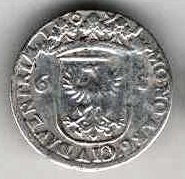
Special thanks to my friend Marco Klomp in the Netherlands for helpful information and the use of the Six Stuiver coin photo. Please visit Marco's Detecting web pageThis Six Stuiver coin is one of six found metal detecting by Marco on one of his beaches in the Netherlands.

Seal reads: GEROTHWOHL & COMP. As soon as
I got the bottle home, I sealed the top with paraffin
as an edge against having air shrinking the cork.
Another nice artifact that would make your imagination
run wild is a brass skeleton room key with a stamped
numbered brass tag attached. It could have been used
for one of the hotel rooms or storage rooms since the
Niantic was at one time a warehouse.

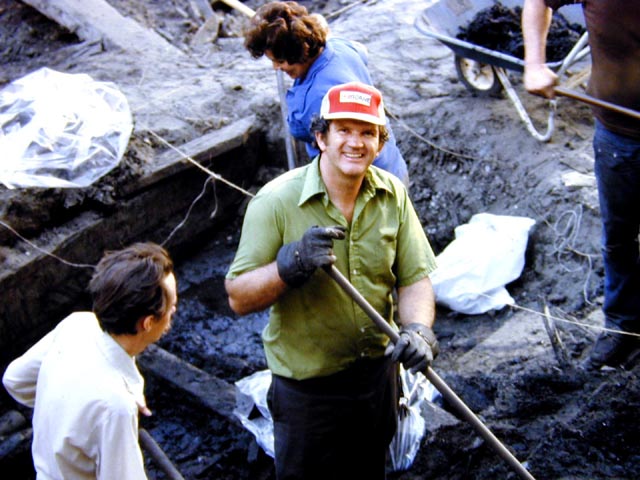
Very shortly the archaeology
department from the San Francisco Maritime Museum put a
stop on the job and closed the site off to everyone
other than their own people and volunteers.
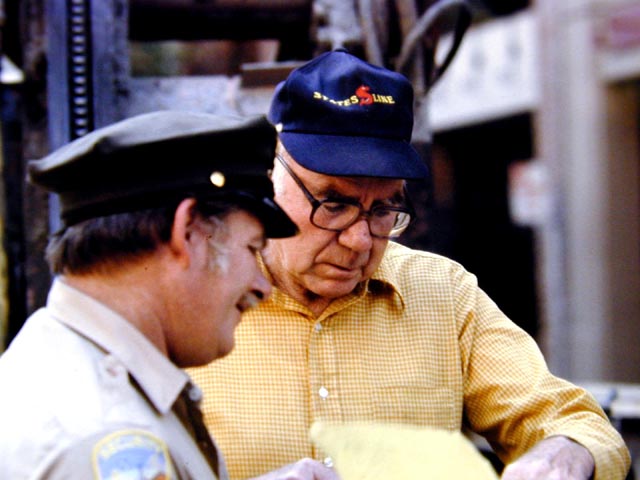
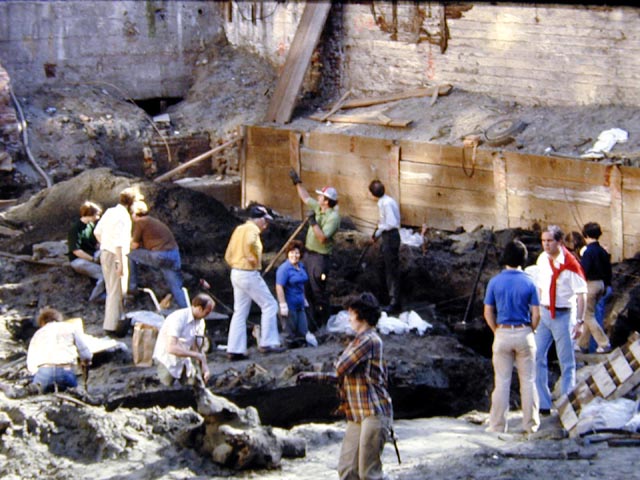
Naturally,
many of us bottle diggers volunteered. When the Niantic
was rediscovered,

it was believed the bow to be facing
east rather than west as depicted in historical
documents.

After further excavation was done
around the hull, it clearly showed that the stern was
pointing east and the bow pointing west.

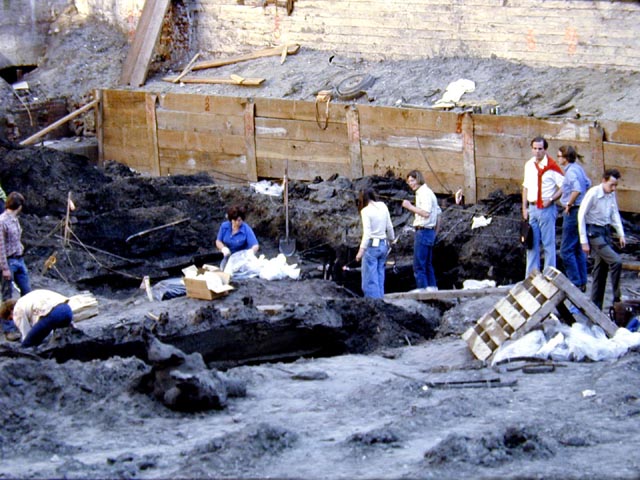
The Niantic was 120 feet in length and
only a portion of the hull extended into the excavation
lot. The remainder of the ship forward to the bow, was
and is still entombed under the pocket park situated
between the excavation pit and the Transamerica pyramid
building. Simply to remove the hull could cause
adjacent land--such as the intersection of Sansome and
Clay, and the vest pocket park next to the Transamerica
building--to collapse.
The Maritime Museum was fortunate to have found
numerous artifacts at the site, including the ship's
long windlass, used to raise the anchor; two pistols,
one rifle and a derringer; 13 bottles of champagne,
stone ware ink bottles, leather-bound books, bolts of
fabric, cabin doors and hundred twenty eight years
plus, old brass paper clips in the form of duck heads.
The site had to cease archaeological surveying and
return work back to the construction of the new Pacific
Mutual Building. Unfortunately $630,000 for full
recovery and $313,000 for partial recovery never
materialized as planned and only a small portion of the
Niantic made it to the Maritime Museum and other local
Historic Preservation Museums. Please check out San Francisco History. An excellent historical site on buried ships in San Francisco's early day harbor. By Ron Filion.
Check out the beginning of the Great Digs-1965-1978GREAT SAN FRANCISCO DIGS
SAN FRANCISCO REVISITED-1997
Many years have passed since the big diggin's.
"Quote"About two years ago the second Great Bottle Dig
hit San Francisco just off Fourth and Brannan Streets.
Back in the mid to late 1800s, this area was a bottle
recycling plant. Not in the way we recycle glass today,
but by cleaning and re-using. Here is an article taken from the San Jose Antique Bottle Collectors Association
monthly newsletter THE LABEL. May 13th, 1999
"Quote"
The Great San Francisco
Dig:Many stories have been
circulating about the fantastic San Francisco dig. It
must have been a thrill of a lifetime for those lucky
enough to take part.Basically the digging started
about mid-February and lasted about three weeks, before
the new owners of the lot stopped the digging. The site
was in the wharf area of an old industrial section of
San Francisco. An old fire map listed it as a
depository storage for the early Pacific Glass Works. A
warehouse was later constructed on the property, which
burned down last December. After the debris and rubbish
was cleared away, an area about 100 feet by 200 feet
was left. Eighty per cent of this area was covered by a
thick layer of concrete. So not only did you need a
shovel and a pick, but a heavy duty sledge hammer to
break up the concrete. Some more enterprising folk
brought in jack-hammers and later a back-hoe was
brought in to help. (Not a great idea. Men entrenched
in holes and machines digging side by side did not
work well together.)
The digging operation continued
around the clock with as many as thirty people digging
at a time. By-standers and spectators also gathered
around the digging site to watch the flurry of dirt and
shovels and howls of glee when the hole produced a
super find.
Many of the area's less fortunate were
hired on the spot, to dig through the top layer of dirt
and concrete. Actually every walk of life was
represented from millionaires to local bums, to regular
every day diggers. Even one T.V. personality, Dana
Carvy from Saturday Night fame joined in the bottle
rush.
Adding fuel to this frenzied digging was the
quantity and quality of bottles being found. Some
conservative estimates place the number of bottles
found to be around eight thousand. Among the best was
the extremely rare, cone shaped Bryant's Stomach
Bitters. These tall eight sided bottles were
manufactured for only one year, 1857. Two perfect
specimens in emerald green were recovered. One of them
will be auctioned off at the next Pacific Glass
Auction. The estimated value is between 30 to 70
THOUSAND DOLLARS. (No wonder the dirt and fists were
flying.)
Also found were two mint Cassins Bitters,
pontiled pineapple bitters, Pacific Congress Waters in
rare colors, inks, pontiled medicines and a few rare
whiskeys. There were also many unknown and never
cataloged bottles found.
Another great story emerging
from the dig. One of the Cassins Bitters was bought on
the digging spot by an observing collector. The lucky
digger was able to convert his wind-fall into a brand
new pick-up truck.
So many stories. I'm sure more
will surface as the experience is lived and relived by
those who participated in the greatest San Francisco
dig known to date. Unquote.
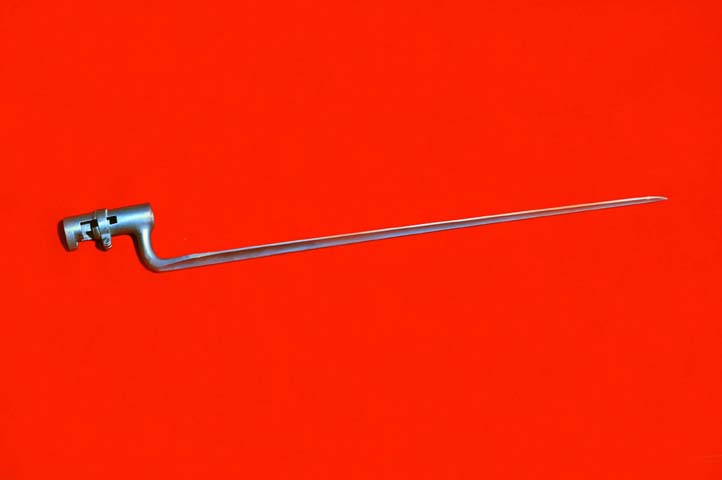
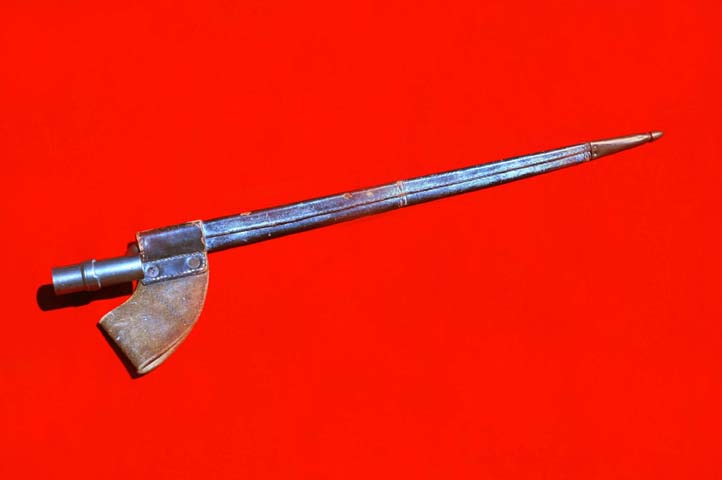
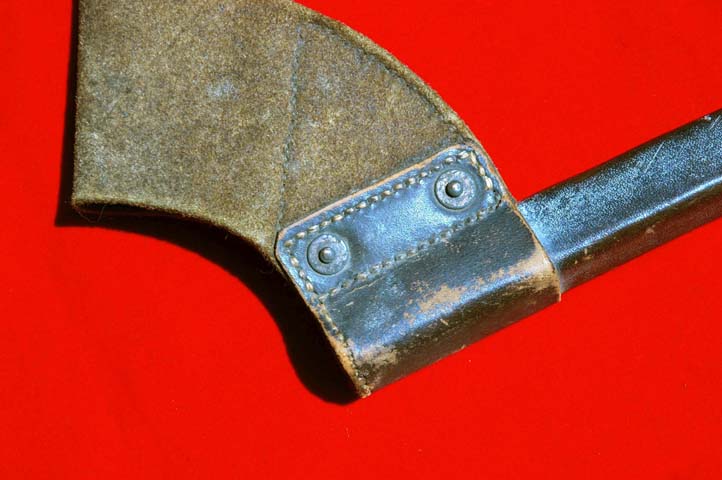
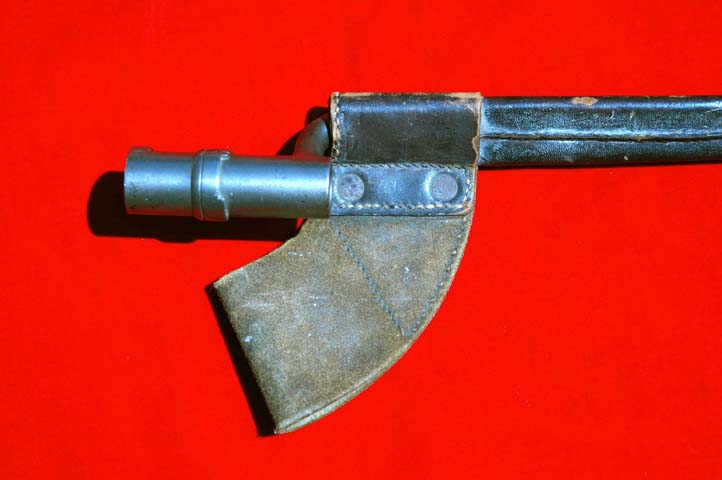
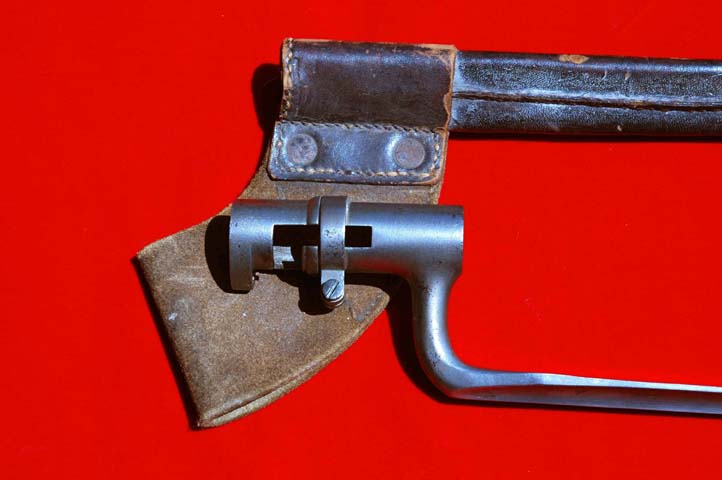
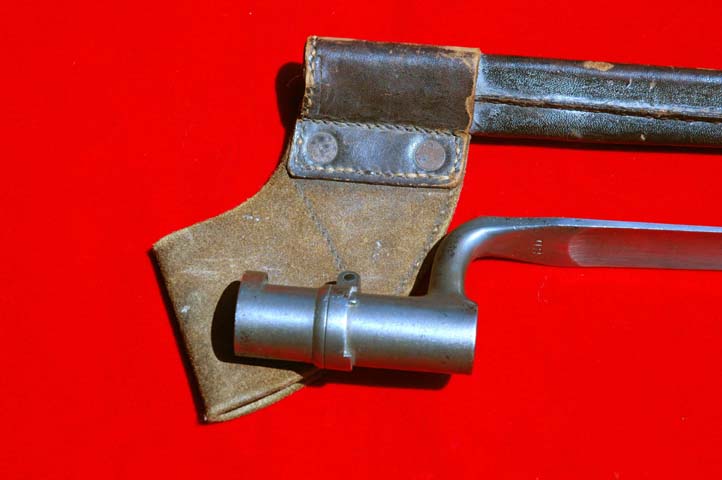
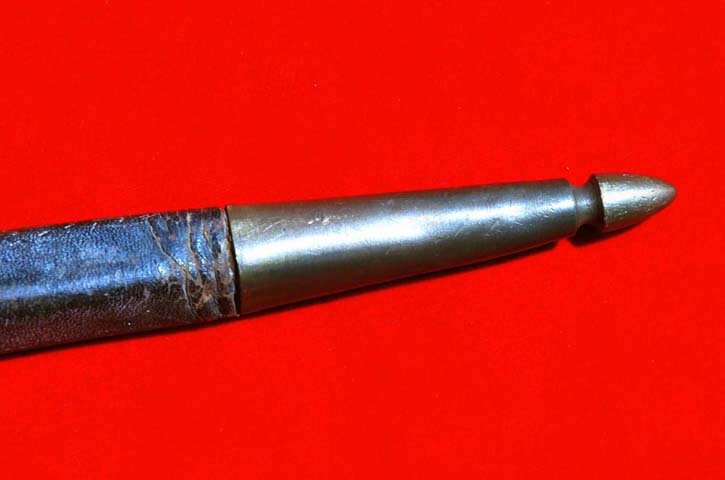
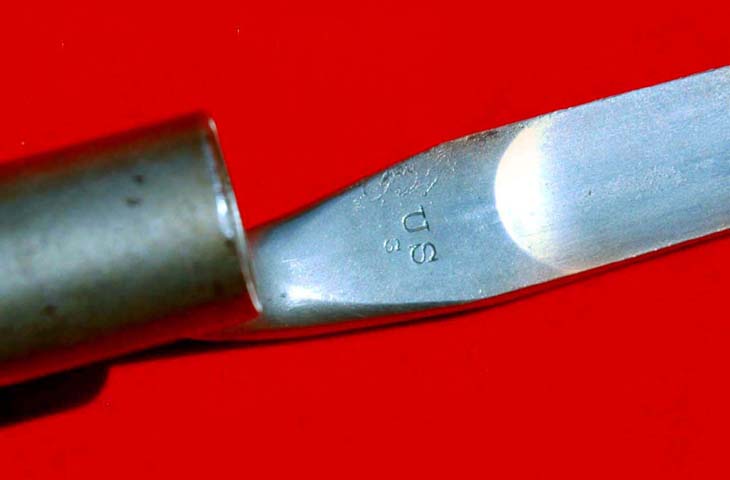
TREASURE IS WHERE YOU FIND ITTreasure hunting/metal detecting has been in my blood for as long as I have been digging and collecting Antique Bottles. About 47 years ago I was fortunate to have permission from an elderly lady whose spouse passed on, to hunt inside her old Victorian home in San Francisco in exchange for price quotes on antique furniture ie: Birdseye maple dresser, lion claw base oak dinner table, tilt mirror oak dressers and numerous straight back chairs and Victorian rockers. In appreciation she told me to take anything I find in the cellar. Oh yeah! Couldn't find any old bottles other than a 1920's Gordon's Gin bottle full of shellac. Found some framed antique pictures and antique plumbing tools and was about to head back upstairs when I glanced up to the rafters and saw a long dark object perched across a cross brace. Reached up and retrieved a bayonet in it's scabbard. Kept it with my other artifacts and few years ago did a Google research on it. Was surprised that I found an early version 1863 Springfield Rifle two rivet scabbard with bayonet. A lucky find!
Bottle Clubs in the Northern California area that
are still going strong: SJABCA (San Jose, CA.), The Golden Gate Historical
Bottle Society (Antioch,Ca.), The 49er Historical
Bottle Association (Auburn, Ca.), The Northwestern
Bottle Collectors Association (Santa Rosa, Ca.) and The
Bidwell Bottle Club (Chico, Ca.). We all cherish the
bottles we have dug at various sites


and the memories associated with the
digs. There's a lot of hard digging and sore muscles
when it comes to digging these treasures of the past,
but the rewards are greatly fulfilled when you look
around at what you have brought to life,

and has been buried and
forgotten for years. Old bottles have their own way of
telling us of the past. Just look at any old bottle
sometime and let your imagination do the rest.
 Happy Hunting! Warren
Whited
Happy Hunting! Warren
Whited  olbeachbum@hotmail.com
This many folks have visited this page  Thanks for visiting the site.