April 3

1880 Birth: Otto Weininger: Austrian philosopher:
Suicide can be individual or collective. In either manifestation it can share similar attributes and arise from parallel psychological anomalies. It can be perversely popular.
In early 20th-century Vienna, for example, a spate of high-profile suicides triggered a pseudo-romantic fad. There seemed to be something dashing in taking one's own life in a grand gesture that apparently made a statement. Pivotal in sensationalizing the fashion was 23-year-old philosopher Otto Weininger who shot himself in 1903 in the same hotel room where Beethoven died (presumably to enhance the dramatic effect).
Weininger's intense auto-anti-Semitism loomed large among his motivations. Born Jewish, he converted to Christianity in his last year but obviously found no salvation. His book Geschlecht und Charakter (Gender and Character) testifies to boundless self-loathing. Weininger lambastes modernity as "Jewish" and asserts that "women and Jews are pimps; their goal is to make man guilty. Our era is not only the most Jewish, but also the most feminine of eras" which "no longer has a single great artist, a single great philosopher. It has the least originality and the biggest hunt for originality."
Moreover, Weininger makes hair-raising "anthropological observations," even embracing notions that "Jewish hair . . . points to the Negro, and the completely Chinese or Malaysian skull shapes, which one so often finds among the Jews—who frequently have a yellow complexion—point to partly Mongolian blood." Harrowing stuff.
Unsurprisingly Weininger's most ardent posthumous fans were the Nazis, foremost Hitler himself who reportedly said he "had only encountered one decent Jew, Otto Weininger, who killed himself when he realized that the Jew thrives on contaminating the authentic folk bloodlines of others."
Weininger's suicide was regarded by Third Reich ideologues as the only "honorable" way for a Jew to cleanse the world of his existence. Repulsive as this undeniably is, it's hardly irrelevant. The noxious Weininger syndrome still afflicts certain Jews. The mental aberration Weininger took to extremes is still being taken to extremes by his torchbearers. But there's one very significant difference. Latter-day Weiningers look out quite nicely for their own well-being. Their self-abhorrence is channeled onto the Jewish collective. They promote national Jewish suicide, not their own personal demise.
1885 Birth: Harry St. John Philby:
The father of the Soviet spy Kim Philby was arrested and interned during the second world war after the Saudi king tipped off British officials that he was leaving the country, Home Office files reveal.
Philby had been a thorn in the government's side in the 1930s after falling out with the Foreign Office over its policy in the Middle East. He had served with the civil service in India and the British administration in Iraq.
By 1930 he had converted to Islam and become an adviser to the then Saudi king, Ibn Saud. At one stage he briefly returned to Britain to stand as a candidate for the fascist British People's party. Detained when he left Saudi Arabia and arrived in Karachi, he was shipped back to Britain in 1940 and sent to a camp at Ascot.
The file dealing with his internment, now deposited at the National Archives in Kew, contains a report from a British official in Jeddah who had been informed by the king that Philby was "mentally deranged" and planned to go to India to undertake anti-British propaganda.
A Foreign Office memorandum recorded Philby's ideological shifts. "He fell out with His Majesty's government [in 1924] and tendered a welcome resignation," it stated. "His book, Sheba's Daughters, contained a venomous attack on British policy in the Aden protectorate."
Harry Philby was interned for a year and released in March 1941. (Guardian.com)
1893 Birth: Leslie Howard:
Leslie Howard Stainer was born in London, to Lilian (Blumberg) and Ferdinand "Frank" Steiner. His father was a Hungarian Jewish immigrant, and his English mother was of German Jewish, and mostly English, descent. Leslie went to Dulwich College. After school, he worked as a bank clerk until the outbreak of World War I, when he went into the army. In 1917, diagnosed as shell-shocked, he was invalided out and advised to take up acting as therapy. In a few years, his name was famous on the stages of London and New York. . . .
In 1939, he played the character that will always be associated with him, that of Ashley Wilkes, the honor-bound disillusioned intellectual Southern gentleman in Gone with the Wind (1939).
However, war clouds were gathering over England, and he devoted all his energy on behalf of the war effort. He directed films, wrote articles and made radio broadcasts. He died in 1943, when the KLM plane he was in was shot down by German fighters over the Bay of Biscay. [For further information, click here.]
1910 Down and out in Vienna:

Almost two months after starving artist Adolf Hitler moves from the Meidlingen shelter, a riot breaks out, when 200 people, trying to gain shelter there, are turned away. Police have to use force, to stop the crowd from storming the gates and taking the place over. The local newspaper, the Arbeiterzeitung, writes: "Thus Vienna’s disgrace has been made permanent, the disgrace of rich Vienna where, night after night, hundreds of people are forced to crawl into miserable caves; and we cannot offer them shelter, but only police sabers instead."
1916 World War I: Gefreiter Adolf Hitler endures trench warfare in Flanders (Artois) with 3 Company, 16 Reserve Infantry Regiment [List Regiment]. [For further details, Click here.]
1917 Vladimir Lenin arrives at the Finland station in Petrograd:
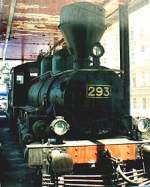
He declared that the World War must be transformed into a series of civil wars, the bourgeois revolution into a social revolution, so that a crisis of European capitalism might be precipitated. In a memorable confrontation, he instantly revealed that he would not accept the more moderate expectations of the Petrograd Soviet . . . .
Lenin: Dear Comrades, soldiers, sailors, and workers! I am happy to greet in your persons the victorious Russian revolution, and greet you as the vanguard of the worldwide proletarian army . . . . The piratical imperialist war is the beginning of civil war throughout Europe . . . . The hour is not far distant when at the call of our comrade, Karl Liebknecht [who was still alive at the time], the peoples will turn their arms against their own capitalist exploiters . . . . The worldwide Socialist revolution has already dawned . . . . Any day now the whole of European capitalism may crash. The Russian revolution accomplished by you has prepared the way and opened a new epoch. Long live the worldwide Socialist revolution!
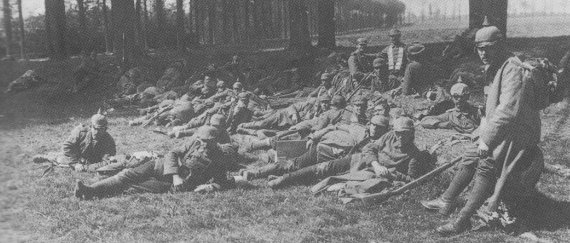
1917 World War I: List Regiment: Gefreiter Adolf Hitler's 16 Reserve Infantry Regiment, 3 Company, fortify trenches near Arras. [For further details, Click here.]
1918 World War I: Various:
Ferdinand Foch becomes supreme Allied commander: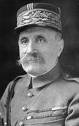
The Allied Supreme War Council formally confers the post of commander in chief on the Western Front to General Ferdinand Foch. [For further details, Click here]
Gefreiter Adolf Hitler's 16th RIR begins constructing fortified works in difficult defensive positions on an active front with German assault regiments near Fountaine (Montdidier). [For further details, Click here.]
William G. Sharp on the Paris Gun:
The Secretary of State has received from Ambassador Sharp in Paris a graphic report of his visit to the scene of the horrible tragedy which occurred on the afternoon of Good Friday in a church by the explosion of a German shell projected from far back of the enemy lines a distance of more than seventy miles. The appalling destruction wrought by this shell is, as the Ambassador remarked, probably not equalled by any single discharge of any hostile gun in the cruelty and horrors of its results. In no other one spot in Paris, even where poverty had gathered on that holy day to worship, could destruction of life have been so great. Nearly a hundred mangled corpses lying in the morgues, with almost as many seriously wounded, attested to the measure of the toll exacted. Far up to the high, vaulted arches, between the flying buttresses well to the front of the church, is a great gap in the wall, from which fell upon the heads of the devoted worshipers many tons of solid masonry. It was this that caused such a great loss of life.
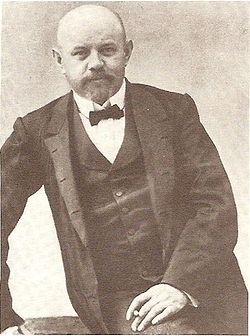
1919 Weimar: Dietrich Eckart and Rudolf Gorsleben are arrested by the Communists. Only Eckart's quick-witted answers during interrogation prevent their execution along with the other Thule hostages.
[He] developed an ideology of a "genius higher human", based on earlier writings by Lanz von Liebenfels; he saw himself in the tradition of Arthur Schopenhauer and Angelus Silesius, and also became fascinated by Mayan beliefs. Eckart also loved and strongly identified with Henrik Ibsen's Peer Gynt, but never had much sympathy for the scientific method. [After moving] back to Munich, Eckart joined Rudolf von Sebottendorff's mystic right-wing Thule Society in 1913 and became politically active; in 1915, he also wrote the nationalist play Heinrich der Hohenstaufe, in which he postulated a claim to world leadership for the German people. Later on, between 1918 and 1920, Eckart was the editor of the antisemitic periodical Auf gut Deutsch, which he published with the help of Alfred Rosenberg and Gottfried Feder. A fierce critic of the newly-formed Weimar Republic, he vehemently opposed the Treaty of Versailles, which he viewed as treason, and propagated the so-called Dolchstosslegende [Stab in the Back], according to which the Social Democrats and Jews were to blame for Germany's defeat.
1922 Weimar: W.A. Harriman & Co opens its European headquarters in Berlin with the aid of the Hamburg-based M.M. Warburg & Co. Government investigators later said it was during this time that Harriman first became acquainted with the German industrialist, Fritz Thyssen. Harriman subsequently agreed to set up a bank for Thyssen (Union Banking Corporation) in New York City. The following year, Thyssen will become one of Hitler's largest financial backers. (THP)
1922 Joseph Stalin is appointed General Secretary of the Communist Party by its new Central Committee. This makes him de facto leader of the country.
1926 Volkishness: Lanz von Liebenfels and ONT brothers Ladislaus and Wilhem travel to Szent Balazs and construction on the new priory of Marienkamp starts shortly thereafter. (THP)
1930 Birth: Helmut Kohl: Chancellor of Germany from 1982 to 1998 (West Germany between 1982 and 1990) and also the leader of the Christian Democratic Union (CDU) from 1973-1998. His 16-year tenure was the second longest of any German chancellor in the history of Germany, being surpassed only by Otto von Bismarck. During his time in office, Kohl was the architect of the German reunification and together with French President François Mitterrand, the Maastricht Treaty which created the European Union.
1933 Church and Reich: The Kreuz und Adler (Cross and Eagle) organization is founded by Catholic supporters of the new Nazi state. Formation of this group is initiated by Papen, who assumes the title of Protector. (THP)
1936 Death: Bruno Hauptmann--electrocuted in Trenton, N.J., for the kidnap-murder of the Lindbergh baby. (AP)
1939 Various:
Press Reactions to Hitler's April 1 Speech: Although Hitler's speech at Wilhelmshaven was overshadowed by the British pledge to Poland, it was clearly bitter and threatening, particularly against Britain's efforts to protect Eastern European States from Germany.—The Times (London)
It is evident from the speech which Hitler made yesterday at Wilhelmshaven that Britain's warning of her willingness to go to war if Poland is attacked at this juncture of affairs of Europe has been read with care in Germany. It was a truculent speech, in the usual Hitler manner, filled with derision for the democracies and boasts of Germany's willingness to measure her strength with that of any other nation in war as well as in peace. But it proposed no immediate action other than a possible denunciation of Germany's naval treaty with Britain - which would amount merely to an empty gesture - and it refrained significantly from any ultimatum to Poland.—The New York Times
The Wilhelmshaven speech was distinguished by a reaffirmation of German's desire for peace, and at the same time a thinly disguised threat to Poland . . . . Chancellor Hitler declared that Germany did not dream of attacking other nations, and he offered as proof his decision to call the next Congress of the National Socialist Party the Congress of Peace. He would do well to wait until that desire for peace is expressed clearly in the acts of the Berlin Government, before congratulating himself. -Le Temps
Case White: Hitler issues a war directive marked "Most Secret" and has it delivered by hand to his senior war commanders. "Since the situation on Germany's eastern frontier has become intolerable and all political possibilities have been exhausted," it began, "I have decided upon a solution by force." Preparations for the attack on Poland, "Case White" (Operation White), "must be made so that the operation can be carried out any time from September 1, 1939." (THP) [See: What Were Adolf Hitler's Major Blunders?]
1940 World War II: Churchill resigns as Minister for the Coordination of Defense and is appointed to chair the Ministerial Defense Committee, significantly increasing his responsibilities, even though he had not been success in his previous post. One of his first acts is to obtain consent for the mining of the Norwegian Leads. (THP)
1941 World War II: Various:
Yugoslavia North Africa: The British evacuate Benghazi in the face of the German advance. [See: The Mediterranean Strategy.]
1942 Various:
World War II: Japanese launch major offensive against Bataan:
Japanese infantry stage a major offensive against Allied troops in Bataan, the peninsula guarding Manila Bay of the Philippine Islands. [For further details, Click here]
Holocaust: Germany: 129 German Jews from Augsburg are deported to Izbica and Belzec. The once 1000-strong Jewish community ceases to exist. (THP)
1943 World War II: North Africa: The German defenders continue to hold off attacks by Patton's troops around El Guettar.
1945 World War II: Stalin to FDR:
I have received your message on the question of negotiations in Berne. You are absolutely right that, in connection with the affair regarding negotiations of the Anglo-American command with the German command somewhere in Berne or some other place, there has developed an atmosphere of fear and distrust deserving regrets. You insist there have been no negotiations yet. It may be assumed that you have not yet been fully informed. As regards my military colleagues, they, on the basis of data which they have on hand, do not have any doubts that the negotiations have taken place, and that they have ended with an agreement with the Germans, on the basis of which the German commander on the Western Front, Marshal Kesselring, has agreed to open the front and permit the Anglo-American troops to advance to the east, and the Anglo-Americans have promised in return to ease for the Germans the peace terms. I think that my colleagues are close to the truth. Otherwise one could not have understood the fact that the Anglo-Americans have refused to admit to Berne representatives of the Soviet command for participation in the negotiations with the Germans. I also cannot understand the silence of the British, who have allowed you to correspond with me on this unpleasant matter, and they themselves remain silent, although it is known that the initiative in this whole affair with the negotiations in Berne belongs to the British. I understand that there are certain advantages for the Anglo-American troops as a result of these separate negotiations in Berne or some other place, since the Anglo-American troops get the possibility to advance into the heart of Germany almost without resistance on the part of the Germans, but why was it necessary to conceal this from the Russians, and why were your Allies, the Russians, not notified? As a result of this at the present moment the Germans on the Western Front in fact have ceased the war against England and the United States. At the same time the Germans continue the war with Russia, the Ally of England, and the United States. It is understandable that such a situation can in no way serve the cause of preservation of the strengthening of trust between our countries . . . . I personally and my colleagues would never have made such a risky step, being aware that a momentary advantage, no matter what it would be, is fading before the principal advantage of the preservation and strengthening of the trust among the Allies. [See: Did Adolf Hitler Cause the Cold War?]
1945 From Gauleiter Uiberreither to Speer:
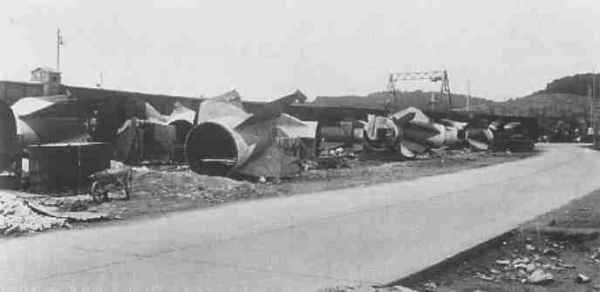
Concerning Fuehrer's orders of March 19, I request detailed instructions as to which armament plants in my Gau are not to be destroyed under any circumstances. Since the military situation is completely fluid, a surprise enemy breakthrough can be expected at any moment ... The fate of the armaments plants in upper Styria should be determined on the basis of the military situation in the Lower Danube region, but I have no information about that. Should the hydroelectric or steam power plants on the Drau and the Mur be destroyed before they can fall into the hands of the enemy undamaged? Your guidelines are only partly applicable here, since there is no definite front line. (Speer) [See: The Last Days of the Third Reich.] 1945 From Speer to Gauleiter Uiberreither:
According to the Fuehrer's orders of March 30, 1945 there is to be no scorched earth. All installations and plants should be crippled so that the enemy will derive no additional military potential from them. In almost every case expert crippling by engineers will be sufficient and will fulfill the conditions stipulated by the Fuehrer. This applies to the plants mentioned in your cable. The Fuehrer's order of March 30, 1945, was intended to eliminate the varied interpretations that could be attached to the order of March 19, 1945, and to establish his unequivocal commitment to the method of crippling. Destruction is therefore permissible only if crippling would not achieve the desired effect. In addition the Fuehrer proclaims: "Work until the last possible moment. Power plants are to be crippled only." [See: Why Did Hitler Insist on No Surrender?] 1946 Death: Masaharu Homma: Japanese Lt. General is executed outside Manila in the Philippines for leading the Bataan Death March.
1948 President Harry Truman signs Marshall Plan:
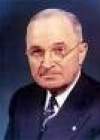
President Harry S. Truman signs the Economic Assistance Act, which authorized the creation of a program that would help the nations of Europe recover and rebuild after the devastation wrought by World War II. Commonly known as the Marshall Plan, it aimed to stabilize Europe economically and politically so that European nations would not be tempted by the appeal of communist parties. [For further details, Click here]
1951 Wunderwaffen: Now that the Soviet rocket program is well underway, the 234 shanghaied German scientists, now stationed on the island of Gorodomlya, begin to be repatriated back to Germany. Edited by Levi Bookin (Copy editor) Click to join 3rdReichStudies
Please note that the list-owner and the moderator are not responsible for, and do not necessarily approve of, the random ads placed on our pages by our web server. They are, unfortunately, the price one pays for a 'free' website.
FAIR USE NOTICE: This site may contain copyrighted material the use of which has not always been specifically authorized by the copyright owner. We are making such material available in our efforts to advance understanding of historical, political, human rights, economic, democracy, scientific, environmental, and social justice issues, etc. We believe this constitutes a 'fair use' of any such copyrighted material as provided for in section 107 of the US Copyright Law. In accordance with Title 17 U.S.C. Section 107, the material on this site is distributed without profit to those who have expressed a prior interest in receiving the included information for research and educational purposes. If you wish to use copyrighted material from this site for purposes of your own that go beyond 'fair use', you must obtain permission from the copyright owner.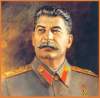


levi.bookin@gmail.com