| “After the war, former Confederates [had] wondered how to hold on to their . . . pride after [the] devastating defeat. . . . So they reverse-engineered a cause worthy of [their] heroics. They also sensed . . . that the end of slavery would confer a gloss of nobility, and bragging rights, on the North," says Donald von Drehle, "The Civil War, 1861-2011, The Way We Weren't" (Time, 18 April 2011), p 40. So they resolved on denial and disinformation, including pretending that slavery had been constitutional.
"Attitudes that provoked the Civil War and still cause much red state-blue state nastiness have never disappeared, whether the issue is race, religion, guns, states' rights, trade, central banks or immigration," a quote from the review by Prof. Geoffrey Wawro of the book by Simon Winchester, OBE, The Men Who United the States (Harper Collins Pub, 15 October 2013). “The readiness with which Southern [slavers and accessories] prefer the most false and audacious claims . . . exhibits a state of society in which truth and honor are but little respected,” says Lewis Tappan, Address to the Non-slaveholders of the South: on The Social and Political Evils of Slavery (New York: S.W. Benedict, 1843), p 36. Of course they'd lie! |
Practice (Tradition, What People Do) Is Legal
It may be “practice,” history, or “tradition” for people to jaywalk or rob or kidnap or enslave, for example, as pro-slavers argued. That is what people historically do (they said), therefore, that is what the law and Constitution allow! But such circular reasoning is wrong reasoning.
| “Right is still right, even if nobody is doing it. And wrong is still wrong, even if everybody is doing it.”—Texas Ranger saying.
“An error does not become truth by reason of multiplied propagation, nor does truth become error because nobody sees it.”—Mohandas Gandhi. |
| “what ought to be done is fixed by a standard . . . whether it usually is complied with or not.”—Texas & Pac Ry v Behymer, 189 US 468, 470; 23 S Ct 622, 623; 47 L Ed 903 (U.S. Supreme Court, 1903). |
| “designed to disrupt” nonconforming practice (or lower laws)— U.S. v City of Los Angeles, 595 F2d 1386, 1391 (CA 9, 1979). |
| “[g]ross outrages, in open defiance of Magna Charta and common law, have been continued through entire generations.” Nonetheless, law is “designed to disrupt” practice, so “customs and usages do not define or create law, but should be controlled by it.”—William Goodell, Slavery and Anti-Slavery (New York: William Harned, 1852), p 576. |
|
|
|
Abolitionist Rep. Thaddeus Stevens once gave an example of the above concept. He cited the story of someone who was disagreeing.
Later that same individual mentioned a recent murder, “Did you hear of that atrocious murder committed in our town? A [criminal] deliberately murdered [someone] .” The respondent said, “I think you are mistaken.” “How so? I saw it myself.” “You are wrong, no murder was or could be committed, for the law forbids it!!”
Point made!—Rep. Thaddeus Stevens, Congressional Globe, 39th Cong, 1st Sess, 18 Dec 1865, pp 72-75. (Full Text) Likewise, re slavery! Just because something (e.g., kidnapping, rape, slavery, murder, secession) is illegal, doesn't mean it doesn't happen. Harriet Beecher Stowe, Key (1853), p 92, had made the same point. |

| (1) "there were no English statute laws . . . authorizing the holding of slaves, either in England or in the American colonies," and
(2) "the common law of England was incompatible with slavery, and neither recognized nor permitted its existence." Goodell, supra, pp 18 and 49-51; and Benjamin Shaw, Illegality of Slavery (Boston, 1846), p 2. |
Gerrit Smith, Letter of Gerrit Smith to Hon. Henry Clay (New York: American Anti-Slavery Society, 21 March 1839), p 19; Alvan Stewart, Legal Argument For the Deliverance of 4,000 Persons from Bondage (New York: Finch & Weed, 21-22 May 1845), p 19; Rep. Horace Mann, Slavery and the Slave-Trade . . . (23 February 1849), pp 27-32; Rev. William Goodell, Slavery and Anti-Slavery (New York: Wm. Harned Pub, 1852), pp 572-576; Abraham Lincoln, "Speech at Peoria" (16 Oct 1854), p 221; and Edward C. Rogers, Slavery Illegality in All Ages and Nations (Boston: Bela Marsh, 1855), pp 82-83.
| "Captivity and servitude are both contrary to the law of nature; for by that law all men are born free." (Institutes, 21 November 533 C.E.)
The Institutes were following ancient Roman law, "that by nature all men are free [a legal principle] as old as ancient Rome; and the law of Rome repeatedly asserts, that all men by nature are free, and that slavery can subsist only by the laws of the State. (Digests, B. 1, T. 1, s. 4; B. 1, T. 5, ss. 4, 5.)" Cited in People ex rel. Napoleon v Lemmon, 5 Sand SCR 681; 7 N Y Super 681 (New York, 12 Nov 1852) aff'd 26 Barb 270, 287-289 (New York, 30 Dec 1857) aff'd 20 NY 562; 1860 WL 7815 (New York, March 1860). |
| "As soon as a man puts foot on English ground, he is free: a Negro may maintain an action against his master for ill usage [modern term, reparations], and may have a Habeas Corpus, if restrained of his liberty." |
| A person can obtain a writ of habeas corpus without being a citizen, as it covers anyone unlawfully detained.—Lysander Spooner, The Unconstitutionality of Slavery [Boston: Bela Marsh, 1845], pages 105 and 276).
Habeas corpus continues all these years later to be as originally intended, for all "persons," regardless of citizenship. See, e.g., Matthew Rothschild, "A Great Decision on Habeas Corpus," by Matthew Rothschild (The Progressive, 13 June 2008). |
| "[T]he colonial charters, authorizing the colonial Legislatures to enact laws, gave no license to slavery, and contained the general proviso, that the laws of the colonies should 'not be repugnant or contrary, but as nearly as circumstances would allow, conformable to the laws, statutes, and rights of our kingdom of England.'"
"The charters of Virginia, Maryland, the Carolinas, and Georgia, as well as of Pennsylvania and the New England colonies, were essentially alike in this regard." Wherefore, "there were no colonial enactments that authorized the holding of slaves, or defined the relation and condition of slavery." Goodell, supra, p 18; Spooner, supra, pp 21-31. [Instead, for example:] "The first settlement of Georgia was commenced under auspices decidedly hostile to slavery. Gen. James Oglethorpe [1696-1785], a member of the British Parliament, 'conceived the idea of opening for the poor of his own country, and for persecuted Protestants of all nations, an asylum in America.' [So he set up Georgia. The governing] Trustees strictly prohibited slavery, and 'declared [it] to be not only immoral, but contrary to the laws of England.'" Goodell, supra, pp 20-21, citing, with emphasis added, Marcius Willson, American History (NY: Ivison, Phinney, Blakeman & Co, 1846), pp 261-262. |
| "if a man wishes to preserve his slaves, let him attach them to him by affection, or make fast the bars of their prison, or rivet well their chains [details], for the instant they get [away] they have broken their chains, they have escaped from their prison, and are free." [See Context.] |
| "we take it to be a clear principle that the common law in force at the emigration of our ancestors is deemed the birth right of the colonies unless so far as it is inapplicable to their situation, or repugnant to their other rights and privileges." (This is a federal Supreme Court case referencing the common law.) |

"The right to freedom being the gift of Almighty God, it is not in the power of man to alienate this [original grant] gift and voluntarily become a slave [e.g., be taxed 33¢ for tea!]."—Samuel Adams, "The Rights of the Colonists" (Boston: 20 Nov 1772). Adams was a Revolutionary leader. "Rebellion to tyrants is obedience to God."—John Bradshaw (1602-1659). Britain "covenanted with the first settlers . . . that we should enjoy 'all the Libertys of free natural born subjects of Great Britain.'"—Paul Revere, Letter, c 1782. Revere was the famous 'Midnight Rider' warning that 'the British are coming.' "I was involved in several causes [lawsuits] in which negroes sued for their freedom, before the [1776] Revolution. The [legal] arguments in favour of their liberty were much the same as have been urged since . . . arising from the rights of mankind."—John Adams, Letter, 21 March 1795. Adams became U.S. President, 1797-1801. "Early in the agitation against Great Britain, individuals had remarked on the inconsistency of a people holding slaves and at the same time complaining that Parliamentary taxation would reduce them to slavery. As the struggle progressed, more and more Americans came to see the need for casting out this beam."—Prof. Edmund S. Morgan, The Birth of the Republic 1763-1789 (Chicago: University of Chicago Press, 1956), p 96. "Resistance to tyrants is obedience to God."—Thomas Jefferson. "Opposition to tyrants is obedience to God."—New Haven (cited by Alexander Winston, "The Hunt for the Regicides," 16 American Heritage (# 1) pp 26-29, 90-93 (December 1964), at p 93. The American Revolution was therefore deemed a "holy resistance to oppression."—Marquis de Lafayette, Bunker Hill Anniversary Speech (17 June 1825).
| "We hold these truths to be self-evident, that ALL MEN are created equal; that they are endowed by their Creator with certain inalienable rights, among which are life, liberty, and the pursuit of happiness.
"That, TO SECURE THESE RIGHTS, GOVERNMENTS ARE INSTITUTED AMONG MEN, deriving their just powers from the consent of the governed; "THAT WHENEVER ANY FORM OF GOVERNMENT BECOMES DESTRUCTIVE OF THESE ENDS, IT IS THE RIGHT OF THE PEOPLE TO ALTER OR ABOLISH IT, and to institute a new Government, laying its foundation on such principles, and organizing its powers in such form, as to them shall seem most likely to effect their safety and happiness.”—2/4 July 1776. The Declaration's Paragraph 2 reference to mankind as "endowed by their Creator with certain unalienable Rights, that among these are Life, Liberty, and the Pursuit of Happiness" rebuts the slaver view that rights come from government, the Declaration was founded on the view that God, not government, is the author and grantor of independence, and that government's purpose is to "secure [protect] these Rights." This is all part of the "Natural Law" concept of law known in the Revolutionary Era. The "Natural Law" concept is evident in Romans 2:14-16. God as giver of life is evident in, e.g., Genesis 2:7. That God is pro-freedom is evident from, e.g, Galatians 5:1. The "Pursuit of Happiness" concept is evident in Ecclesiastes 3:13. |
| "has never been repealed. It was, for years, the only Constitutional law of the United States, and it is no less Constitutional law now, than formerly," citing a then authority, John C. Spencer, saying that "'The first act of our nation (the Declaration of Independence) being a solemn recognition of the liberty and equality of ALL MEN, and that the rights of liberty and happiness are inalienable—was the corner-stone of our [nation], and is above all Constitutions and all laws.'" Goodell, supra, p 574. |
"[Now] the people of America [are] more favorable to the natural rights of mankind, and to that natural, innate desire of Liberty, which the Heaven (without regard to color, complexion . . .) has inspired all the human race.
"[So] our Constitution . . . declaring that all men are born free and equal [renders] slavery . . . totally repugnant . . . inconsistent. . . . there can be no such thing.""nowhere [been] expressly enacted or established. It had been a . . . practice.
4. The Constitution Banned Slavery | "In the Virginia Convention that ratified the Constitution, Patrick Henry, (a member of the Federal Convention,) said that Congress, by the Constitution, 'had power to pronounce all slaves free.' 'There is,' said he, 'no ambiguous implication or logical deduction. The paper speaks to the point. They have the power in clear and unequivocal terms, and will clearly and certainly exercise it.'
"In the same Convention, Gov. Randolph said: 'They insist that the abolition of slavery will result from this Constitution. I hope there is no one here who will advance an objection so dishonorable to Virginia. I hope that at the moment they are securing the rights of their citizens, an objection will not be stated that those unfortunate men now held in bondage BY THE OPERATION OF THE GENERAL GOVERNMENT, may be made FREE.' "With this 'understanding' the Constitution was ratified by Virginia. "General Wilson, another member of the Federal Convention, from Pennsylvania, assured the people of that State that the Constitution "laid a foundation for banishing slavery out of this country." See Lewis Tappan, et al., Proceedings of Convention (New York, 1855), p 19. |

| Forbes v Cochrane, 2 Bran & Cressw 448; 3 Dowl & Ryl 679; 107 Eng Rep 450 (1824);
Lunsford v Coquillon, 14 Martin 401 (Louisiana, May 1824) [cited by S. P. Chase, Brief, 1837]; Julia v McKinney, 3 Mo 270 (Missouri, Oct 1833); Marie Louise v Marot, et al, 8 La (Curry) 475 (June 1835) and 9 La (Curry) 473 (Louisiana, May 1836) [cited by Chase, Brief, supra, 1837]; |
| These clauses enable the federal government to enforce people's rights, including the right to freedom, i.e., no slavery recognized. The federal government would have been of no value if it and its courts could NOT enforce all aspects of the Constitution.—Cohens v Common-wealth of Virginia, 19 US (6 Wheat) 264; 5 L Ed 257 (1821); Ableman v Booth, 62 US (21 How) 506; 16 L Ed 169 (1859); Alpheus T. Mason and William M. Beaney, American Consitutional Law, 5th ed (Englewood Cliffs, NJ: Prentice-Hall, Inc, 1972), p 118. |
| Clauses that slavers pretend relate to slavery, the so-called "three-fifths" clause, and the so-called "fugitive slave" clause, were actually on other subjects! Even if such clauses had related to slavery (they did not), they would have been effectively superseded and repealed by the subsequent adoption of the Bill of Rights, which of course, have authority over any clause prior to them. Benjamin Franklin, signer of both the Declaration of Independence and Constitution, was elected in 1787, as president of America's first anti-slavery society! He certainly never deemed the Constitution compatible with slavery! See also the analysis of clauses such as the "three-fifths" clause, by Lysander Spooner, Unconstitutionality of Slavery (1845), pp 73-81 and 242-270, and Robert Rantoul, Jr., The Fugitive Slave Law (Lynn, MA: 3 April 1851), pp 7-8. . The bottom line is this: "The framers of the Consitution had not intended to make slavery a national institution supported by the Union's fundamental law." Moreover, its words "were not intended to make the Constitution a proslavery compact."—Fehrenbacher, The Slaveholding Republic, supra, pp ix-x. |
| "the Old Congress passed an ordinance abolishing slavery in the North-Western Territories, and precluding its future introduction there.
"The first Congress under the new Constitution ratified this ordinance . . . the ratification in the new Congress received the vote of every member except Mr. Yates, of New York, the entire Southern delegation voting for its adoption. "By this ordinance slavery was excluded from Ohio, Indiana, Illinois, Michigan, Wisconsin, and Iowa."—Goodell, pp 83 and 574; Smith, supra, p 17, Spooner, supra, p 288, Stewart, supra, p 17; and, Lincoln, "Peoria Speech, 16 Oct 1854," Nicolay, John G. and John Hay, eds., Complete Works of Abraham Lincoln, Vol II (New York: Francis D. Tandy Co, 1894 and 1905), p 194. There had been another weaker Ordinance, 1784. The one of 1787 was markedly more anti-slavery, because in three years, "New Englanders by this time had become strongly opposed to slavery."—Prof. Edmund S. Morgan, The Birth of the Republic 1763-1789 (Chicago: University of Chicago Press, 1956), p 116. "It [the Ordinance of 1787] was formed before the dogma that THE NATION [the federal government] could not SUPPRESS [ban] SLAVERY had ever been heard of."—Lewis Tappan, et al., Proceedings of Convention (New York, 1855), p 41. |
| The Ordinance became an issue in subsequent court cases (just as laws do now). It was
|
The proposed Constitution did not take effect automatically. It needed voter approval. Slaver Patrick Henry opposed the proposed Constitution, urged voters to reject it because it was anti-slavery. See " Patrick Henry's Case Against the Constitution: The Structural Problem with Slavery" by Robin L. Einhorn, in Journal of the Early Republic;Winter 2002, Vol. 22, Issue 4, p. 549 (December 2002). It "[d]iscusses U.S. politician Patrick Henry's argument against the proposed U.S. Constitution. Efforts to persuade the Virginia convention to reject the proposed Constitution; Perceived inevitability of freedom for slaves; Henry's resting of his argument on economic interest."
On the other hand, due to pro-freedom voter fears that the proposed Constitution lacked a "bill of rights," its defenders in The Federalist Papers,
| "assured them that the Constitution was more than the equivalent of such bills of rights" under which slavery had already been recognized as banned, and assured them that the clauses stating its purpose, e.g., to "secure the blessings of liberty" to "the people of the United States" constituted "'a better recognition of popular rights' than could otherwise have been framed." |
But even those reassuring words were not enough to satisfy some people, e.g., Thomas Jefferson (as shown by writings of his at the time).
"No person shall be . . . deprived of life, liberty, or property, without due process of law." "'Due process of law' includes an indictment, trial by jury, and judgment rendered in open court." See Rep. Horace Mann, Slavery and the Slave-Trade . . . . (Washington, D.C.: 23 Feb 1849), pp 41-44; Alvan Stewart, Legal Argument For Deliverance from Bondage, supra, pp 34-35; Goodell, Slavery and Anti-Slavery, supra, pp 575-576, and Tappan, Proceedings, supra, p 15. "No one will pretend that any slave in the United States ever lost his liberty by this process, or that 'due process of law' could ever reduce any man to slavery, though it may deprive him of liberty by imprisonment for crime."
|
Slaves were being held without jury trial at all, much less 'speedy.' |
"As men whose intentions require no concealment generally employ the words which most directly and aptly express the ideas they intend to convey, the enlightened patriots who framed our Constitution, and the people who adopted it, must be understood to have employed words in their natural sense, and to have intended what they have said."
Gibbons v Ogden, 22 US (9 Wheat) 1, 188; 6 L Ed 23, 68 (1824) (stating a
"rule of construction of constitutional provisions").
And, "a legislative act founded on a mistaken opinion of what was law, does not change the actual state of the law as to pre-existing cases." Talbot v Seaman, 5 US (1 Cranch) 1, 35; 5 L Ed 15 (1801). (Goodell, supra, p 570; and Spooner, supra, p 276).
 "Where rights are infringed [e.g., if the Constitution writers intended to suddenly constitutionalize and legalize slavery] . . . the legislative intention must be expressed with irresistible clearness to induce a court of justice to suppose a design to effect such objects."
U.S. v Fisher, 6 US (2 Cranch) 358, 390; 2 L Ed 304, 314 (1804). Goodell, supra, p 574;
Spooner, supra, pages 18 and 63; and Rep. Amos P. Granger, Speech (H. Rep., 4 April 1856), p 8.
"Where rights are infringed [e.g., if the Constitution writers intended to suddenly constitutionalize and legalize slavery] . . . the legislative intention must be expressed with irresistible clearness to induce a court of justice to suppose a design to effect such objects."
U.S. v Fisher, 6 US (2 Cranch) 358, 390; 2 L Ed 304, 314 (1804). Goodell, supra, p 574;
Spooner, supra, pages 18 and 63; and Rep. Amos P. Granger, Speech (H. Rep., 4 April 1856), p 8.
Fisher v Fisher, 2 NY Common Law Rpts (2 Johnson's Cases) 88 (Oct 1800);
State v Lasselle, 1 Blackf 60 (Indiana, 1820);
Flack v Cunningham, 1 Blackf 107 (Indiana, 1820);
Le Grand v Darnall, 27 US (2 Pet) 664; 7 L Ed 555 (Jan 1829) (Taney as attorney);
Stoutenborough v Haviland, 15 NJL 266 (Feb 1836);
State v Dillahunt, 3 Del 551 (April 1840);
Bailey v Cromwell, 4 Ill (3 Scam) 71 (July 1841);
Kinney v Cook, 4 Ill 232 (Dec 1841);
Hone v Ammons, 14 Ill 29 (Nov 1852);
Rodney v Illinois Central Ry Co, 19 Ill 42 (1857);
Miller v McQuerry, 17 Fed Cas 335 (#9,583); 5 McLean 469; 10 West Law J 528
it was so [abolished] by the declaration of rights," Goodell, supra, p 111. See also Stewart, supra, pp 26-27.
| "that slavery is established in [any slave] State . . . it is impossible to [find such a clause] . . . for no such proof [law] can be produced . . . in any of the slave States." Cong Globe, 31st Cong, I Sess, App (19 August 1850), pp 1583-1584. Goodell, supra, p 571; Rogers, supra, p 106; Spooner, supra, p 280; and Sumner, supra, Barbarism of Slavery, p 140. |
|
Spooner's Analysis Showing Slavery Unconstitutional from "Was Slavery Constitutional Before the Thirteenth Amendment?: Lysander Spooner's Theory of Interpretation," by Randy E. Barnett
Thomas G. West, Vindicating the Founders, "Was the American Founding Unjust? The Case of Slavery." Stephen D. Foster Jr., "The Founding Liberals" (15 May 2012) ("The Founders . . . did believe that slavery had to end at some point and they knew that progress could not happen all at once, especially when they were just trying to keep the new nation afloat, but they intended us to progress [pursuant to the rule of law they inserted into the Constitution and Bill of Rights].") The language of the Thirteenth Amendment was “not the language of repeal; it does not acknowledge that slavery ever rested upon statute law, or upon right; but it denies its authority longer to exist [in practice].” McElvain v Mudd, 44 Ala 48; 4 Am Rep 106, (Jan 1870) (Dissent by J. Peters, ¶23). |
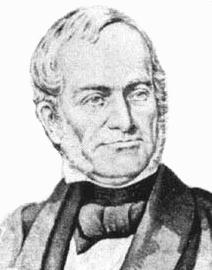
- (a) slavery is unconstitutional, so
- (b) Birney couldn't have harbored a slave (as it is a non-existent status in law) and
- (c) certainly not "knowingly."
| Lunsford v Coquillon, 14 Martin 401 (La, May 1824);
Julia v McKinney, 3 Mo 270 (Oct 1833); Marie Louise v Marot, et al, 8 La (Curry) 475 (June 1835) and 9 La (Curry) 473 (May 1836); Nancy Jackson v Bulloch, 12 Conn 38 (June 1837); Com v Griffin, 42 Ky (3 B Mon) 208 (Fall 1842); Anderson v Thoroughgood, 5 Del 199 (June 1847); Taylor v Horsey, 5 Del 131 (April 1849); and State ex rel Savary v Caroline, 20 Alabama 19 (January 1852); 58 CJ 745, 747 n 19. |
|
The Merino, 22 US (9 Wheat) 391; 6 L Ed 118 (5 March 1824);
U.S. v Gooding, 25 US (12 Wheat) 460; 6 L Ed 693 (16 March 1827); U.S. v Preston, 28 US (3 Pet) 57; 7 L Ed 601 (Jan 1830); U.S. v The Ship Garonne, 36 US (11 Pet) 73; 9 L Ed 527 (Jan 1837); U.S. v Morris, 39 US (14 Pet) 464; 10 L Ed 543 (Jan 1840); and The Amistad, 40 US (15 Pet) 518; 10 L Ed 826 (March 1841). |
|
U.S. v Smith, 27 F Cas 1158 (#16,332); Brunn Col Cas 82; 4 Day 121; NC Cas 81 (D Conn, 1809);
U.S. v Andrews, 24 F Cas 815 (#14,454); Brunn Coll Cas 423; 5 City Hall Rec 120 (SD NY, 15 Sep 1820); U.S. v LaCoste, 26 F Cas 826 (#15,548); 2 Mason 129 (D Mass, Oct 1820); U.S. v Malebran, 26 F Cas 1145 (#15,711); Brunn Col Cas 426; 5 City Hall Rec 122 (D NY, 1820); U.S. v The Francis F. Johnson, 25 F Cas 1200 (#15,157a); 20 Niles Reg 137 (D SC, 6 April 1821); U.S. v Kennedy, 26 F Cas 762 (#15,525); 4 Wash CC 91 (D Penn, April 1821); U.S. v La Jeune Eugenie, 26 F Cas 832 (#15,551); 2 Mason 409 (D Mass, May 1822); Strohm v U.S., 23 F Cas 240 (#13,539); Taney 413 (D Md, April 1840); U.S. v Libby, 26 F Cas 928 (#15,597); 1 Woodb & M 221 (D Maine, May 1846) (has U.S. v Naylor, 27 F Cas 78 (#15,858); 13 Law Rep 449 (D NY, 19 Nov 1856); Charge to Grand Jury, 30 F Cas 1026 (#18,269a); 3 Phila (Pa) 527 (D Georgia, Nov 1859); U.S. v Gould, 25 F Cas 1375 (#15,239); 8 Am Law Reg 525 (SD Alabama, Spring 1860); U.S. v Haun, 26 Fed Cas 227 (#15,329); 8 Am Law Reg 663 (SD Alabama, 30 June 1860); and 58 CJ 745, 747 n 20 and n 23 (summary). |
|
The Caroline, 5 F Cas 90 (#2,418); 1 Brock 384 (D Virginia, Nov 1819);
Strohm v U.S., 23 F Cas 240 (#13,539); Taney 413 (D Md, April 1840); U.S. v The Catherine, 25 F Cas 332 (#14,755); 2 Paine 721; 3 Law Rep 255 (NY, 1840); U.S. v The Augusta, 24 F Cas 892 (#14,477) (SD NY, Sep 1861); U.S. v Nathaniel Gordon, 25 F Cas 1364 (#15,231); 5 Blatchf 18 (SD NY, 8 and 30 Nov 1861) |
'taking' violates their rights, not the taker's - kidnapper's - man-stealer's! Parker Pillsbury, Acts of Anti-Slavery Apostles, p 72 Edward Rogers, Slavery Illegality, p 93 John Rankin, Letters on Slavery, p 99 Charles Sumner, Barbarism of Slavery, pp 131-132 |
| A 1640's precedent on returning slaves as kidnaping victims is cited in Commonwealth v Aves, 35 Mass 193, 208 (1836), in its discussion of the history of colonial law.
"[B]y the constitution and laws of this Commonwealth, before the adoption of the constitution of the United States, in 1789, slavery was abolished, as being contrary to the provisions of the declaration of rights . . . . By a very early colonial ordinance, (1641), it was ordered, that there should be no bond slavery, villenage, or captivity . . . "And by an act a few years after, (1646,) manifestly alluding to some transaction then recent, the general court [legislature] . . . to bear witness against the heinous and crying sin of manstealing, &c., ordered that certain negroes be sent back to their native country (Guinea) . . . . See Ancient Charters, &c., 52, c. 12, § 2, 3." It quoted the declaration of rights, "'All men are born free and equal, and have certain natural, essential, and unalienable rights. . . .' It would be difficult to select words more precisely adapted to the abolition of negro slavery. . . . That [it] was broad enough in its terms to embrace negroes, and that it was intended by the framers of the constitution to embrace them, is proved by the earliest contemporaneous construction, by an unbroken series of judicial decisions, and by a uniform practice from the adoption of the constitution to the present time. The whole tenor of our policy, of our legislation and jurisprudence, from that time to the present, has been consistent with this construction, and with no other." The court further said "the law of this State is analogous to the law of England, in this respect; that . . . slavery is considered as unlawful and inadmissible in both . . . because contrary to natural right and to laws designed for the security of personal liberty." (Pp 210-211). |
| "That it [slavery] is contrary to the law of nature will scarcely be denied. That every-man has a natural right to the fruits of his own labor, is generally admitted; and that no other person can rightfully deprive him of those fruits, and appropriate them against his will, seems to be the necessary result of this admission. . . . Slavery, then, has its origin in force. . . ."
For background on the force and violence involved, see, e.g., As the world's worst court [says Tiffany, supra, pp 49-50], the Supreme Court did not decide for the 'rule of law,' AGAINST that 'practice,' but FOR the practice, contrary to its duty, supra, and falsified as well, citing war as a basis for slavery, contrary to information in the Somerset case briefing, p 28. "And this, you understand, in lands where rapine and conquest, class-tyranny and priestly domination have been the custom since the dawn of history; in which no property-right can possibly trace back to any other basis than force," says Upton B. Sinclair, The Profits Of Religion (1917), in § 3.17, Das Centrum. Even pro-slavery apologists such as theologians George Junkin and Rice admitted "that American slavery ought never to have existed," says Rev. John G. Fee, An Anti-Slavery Manual (New York: William Harned, 1851), pp 86-87. |
“[Thomas] Jefferson, in his forecast [prediction of possible U.S. history], had anticipated this [disunionism over slavery], as the 'rock upon which the old Union would split.' He was right.
“What was conjecture with him, is now a realized fact [March 1861, secession in effect]. But whether he [Jefferson] fully comprehended . . . may be doubted.”
“The prevailing ideas entertained by him and most of the leading statesmen at the time of the formation of the old Constitution were,
“This was an error. . . . and the idea of a government built upon it. . . . Our new government [the Confederate States of America] is founded upon exactly the opposite idea; its foundations are laid – its cornerstone rests – upon the great truth that the Negro is not equal to the white man. That slavery – subordination to the superior [white] race – is his natural and moral condition. This – our new [Confederate] government – is the first in the history of the world based upon this great physical, philosophical, and moral truth.. . . . It [Slavery] is, indeed, in conformity with the Creator. It is not for us to inquire into the wisdom of His ordinances or to question them.”—Reprinted by Frank Moore (ed.), The Rebellion Record: A Diary of American Events, 11 vol (New York: G. P. Putnam, 1868), Vol. I, pp 44-49.
"Now, this very thing, in a recent case in the city of New York, was required by one of the judges of that State."
"In that case, the judge of the State court . . . went so far as to say that the only mode of proving it was by reference to the statute book. . . . it is impossible to comply . . . for no such proof [law] can be produced . . . in any of the slave States." Cong Globe, 31st Cong, I Sess, App, pp 1583-1584 (19 Aug 1850)."The sole cause of the existing disunion excitement which is about to break up the government is the . . . antislavery . . . sentiment." (Cited in Allan Nevins, The Emergence of Lincoln, vol II [New York: Charles Scribner's Sons, 1950], section on secession in the Lower South, pp. 328-335.)
"I have, senators, believed from the first that the [First Amendment freedom of speech and press] agitation of the subject of slavery would, if not prevented by some [unconstitutional] timely and effective measure, end [result as people became aware of slavery's characteristics] in disunion."—South Carolina Senator John C. Calhoun, 4 March 1850.
“. . . African slavery as it exists among us . . . . This was the immediate cause of the late rupture [secession] and present revolution.
Seceding states South Carolina, Mississippi, Georgia, and Texas in their secession resolutions emphasized slavery as THE cause, says
Curtis F, in "Absolute Proof the Civil War Was About Slavery" (3 November 12013).
President Jefferson Davis said likewise, emphasizing slavery as the underlying factor, in his Message to Congress (29 April 1861)—Moore, supra, pp 166-175.
Emphasis on slavery as THE issue, was cited by the Charleston, SC Mercury (11 Oct 1860); and the New Orleans, LA Bee (14 Dec 1860).
Slavery as the cause was cited by Southern secession documents, the voting process for secession, and the members of Congress of resigned to join the Confederacy. The seceders wrote the South's Constitution to specifically uphold slavery, i.e., worded it unlike the U.S. Constitution. For details, see David Barton, "Confronting Civil War Revisionism: Why The South Went to War" (December 2008).
General Ulysses S. Grant concurred in Southerners' analysis of slavery as causing the War. “The cause of the great War of the Rebellion against the United States will have to be attributed to slavery.”—Personal Memoirs (New York: C.L. Webster & Co, 1885-1886), Vol. II, Chapter XXI, Conclusion, first sentence.
Pro-slavery Reverend Dr. Smythe of Charleston said "The war is a war against slavery, and is therefore treasonable rebellion against the Word, Providence and Government of God." [Abolitionists believed the opposite, that the War and Emancipation Proclamation were enforcement actions, the extreme opposite of rebellion.]
"We went to war on account of the thing we quarreled with the North about. I never heard of any other cause of quarrel than slavery. Men fight from sentiment. After the fight is over they invent some fanciful theory on which they imagine that they fought.'' -- Confederate Col. John Mosby, cited by Leonard Pitts, Jr., "The South fought to keep slavery, period" (Miami Herald, 14 April 2010), and: "Confederate 'President'' Jefferson Davis once flatly cited 'the labor of African slaves' as the cause of the rebellion."
While the South pretended to be the "Bible-Belt," Southrons in fact directly violated basic Bible principles:
And see Charles Nordhoff (1830-1901), Secession is Rebellion: Rebellion Cannot Succeed!: The Union is Indissoluble Except by Consent of All the States: An Open Letter to the Rev. A. A. Lipscomb (New York: Baker & Godwin, 1860). Secessionist Southrons were rebelling, while pretending to be the "Bible Belt," even though well knowing that the Bible teaches, "rebellion is as the sin of witchcraft," 1 Samuel 15:23, verifying evilness, Proverbs 17:11, and warranting execution, Exodus 22:18.(Daniel Worth, supra, would likely deem his words still a good description of some Southern legislators who still disrespect rights, indeed, aid and abet rat poisoning cigarettes so as to kill Yankees and blacks in retaliation for the North having won the Civil War and freed the slaves.) Note pertinent medical / analytical findings on politicians' widespread mental abnormality:
Such politicians were aided and abetted by depraved clergymen. Note explanatory background data by the
Axe-Murder
Concubines-for-Clergy
Eye-Gouging
Racking and Salting
Skinning
Slave-Driving
Torture-Murder
Whip-to-Death
Click here for the FSA Text. "A trial by jury necessarily carries with it a trial of the whole right, and a trial of the right to service will be gone into . . . in determining upon any other fact."
"that slavery is [by law] established in the State from which the fugitive has absconded.
"said distinctly [p 1589] that he was not willing the trust the question with the Courts in the free states. . . Hence . . . the peculiar structure of the infamous Fugitive Slave bill, allowing no litigation, no counter evidence, no habeas corpus, no 'due process of law.' If slavery were believed by the slave-holders to be legal, would they fear to have the question litigated in the Courts?" Goodell, supra, p 571.
followed the principle cited in 1849 by Rep. Horace Mann, Speech, pp 30-31 cited a number of anti-slavery court precedents including The French Slave Case, 13 Causes Célèbres 49 (1738); Somerset v Stewart, 20 Howell's State Trials 1 (1772); Sewall's Slaves, 3 Am Jurist 404 (Indiana, 1829); and Commonwealth v Aves, 35 Mass 193 (1836), supra.
| Explanation for citing a French case: French policy stated in 1571, affirmed in 1607, said: "All persons are free in this kingdom; as soon as a slave has reached these frontiers and becomes baptized, he is free."
This case had been cited in briefing in Somerset v Stewart, 20 Howell's 1, 12 (1772). |
| Patton v United States, 281 US 276, 288; 50 S Ct 253; 74 L Ed 854 (1930)
Duncan v Louisiana, 391 US 145, 149; 88 S Ct 1444; 20 L Ed 2d 491 (1968) |
|
"[N]o people are bound to enforce or hold valid in their courts of justice, any contract or law, which offends their morals, or contravenes their policy, or violates a public law, or offers a pernicious example. . . . Slavery is within all these. . . . It is offensive to morals. The testimony of ethical writers against slavery is unanimous and decisive. And some of the most eminent statesmen of the South, as Patrick Henry, Thomas Jefferson, William Pinckney, have concurred with the moralist . . . . Slavery sets before our citizens a pernicious and detestable example." The position paper also refuted the notion that the North was like the South, in having had slavery. Not so, for example, "Massachusetts has known nothing like the slave system . . . The slavery which was abolished here nearly sixty years ago [before 1836] resembled little more than in name the . . . South [system]. It was far milder than the ancient English villenage [during Middle Ages feudalism], and differed from apprenticeship only its duration." |
"Since Washington and Jefferson, in fact ever since [Alexis] de Tocqueville wrote his well-known [1835] book on America, American mores have been deeply altered. . . . the intellectual and moral standards of the nation have [seriously] lowered, principally in political circles. Men who enjoyed some authority on account of their knowledge, their moral character or their fortune, slowly withdrew from public life, disgusted with electoral struggles, repulsed by venality, and frightened by a violent, passionate press," says Lt. Col. Camille Ferri-Pisani, Lettres sur les États-Unis d'Amérique (1862) transl. by Prof. Georges J. Joyaux (1959). |
| We must distinguish form and substance. Not just anything passed by legislators that has the form of a law, is in fact a law. To be a law, an enactment must be constitutional, i.e., within the actual de jure authority of the Legislature. This condition precedent fact is well settled.
"All laws which are repugnant to the Constitution are null and void." Marbury v Madison, 5 US (2 Cranch) 137, 174, 176; 2 LE 60 (1803). "Where rights secured by the Constitution are involved, there can be no rule making or legislation which would abrogate them." Miranda v Arizona, 384 US 436, 491; 86 S Ct 1602; 16 L Ed 2d 694 (1966). "An unconstitutional act is not law; it confers no rights; it imposes no duties; affords no protection; creates no office. It is in legal contemplation, as inoperative as though it had never been passed." Norton v Shelby County, Tennessee, 118 US 425, 442; 6 S Ct 1121; 30 L Ed 178 (1886); Wuebker v James, 58 NYS2d 671, 677 (1944). "The very purpose of a Bill of Rights was to withdraw certain subjects from the vicissitudes of political controversy, to place them beyond the reach of majorities and officials and to establish them as legal principles to be applied by the courts. One's right to life, liberty and property, to free speech, a free press, freedom of worship and assembly, and other fundamental rights may not be submitted to vote; they depend on the outcome of no election." West Virginia State Board of Education v Barnette, 319 US 624, 638; 63 S Ct 1178; 87 L Ed 1628 (1943). Compare Romer v Evans, 517 US 620; 116 S Ct 1620; 134 L Ed 2d 855 (1996). The whole idea of the "Bill of Rights" is to forbid politicians to even vote on taking away peoples' rights. Judges must obey and enforce the constitution and laws themselves, e.g., Matter of Hague, 412 Mich 532; 315 NW2d 524 (1982); Holman v Athens Empire Laundry, 149 Ga 345; 100 SE 207; 6 ALR 1564, 1574-5 (Ga, 1919) ("Neither the opposite party nor the public has the right, legal or equitable, to invade the clear legal rights of another. . . . final settlement of . . . rights does not lie in the broad discretion of the chancellor [court], but in the clear legal and equitable rules which bind the chancellor himself.") Judges must follow the law. Unconstitutional enactments are treated as though they had never existed, see examples in one state alone: Bonnett v Vallier, 136 Wis 193, 200; 116 NW 885, 887 (1908); State ex rel Ballard v Goodland, 159 Wis 393, 395; 150 NW 488, 489 (1915); State ex rel Kleist v Donald, 164 Wis 545, 552-553; 160 NW 1067, 1070 (1917); State ex rel Martin v Zimmerman, 233 Wis 16, 21; 288 NW 454, 457 (1939); State ex rel Commissioners of Public Lands v Anderson, 56 Wis 2d 666, 672; 203 NW2d 84, 87 (1973); and Butzlaffer v Van Der Geest & Sons, Inc, Wis, 115 Wis 2d 539; 340 NW2d 742, 744-745 (1983). |
| Newspaper advertisements for "runaway slaves" increasingly came to describe them in white coloration terms. By 1843, there was a term now no longer familiar, "white negro."
"It is no less certain that white children have sometimes been kidnapped and sold into slavery." Example: "a boy . . . was stolen from his parents at seven years of age, immersed in a tan-vat to change his complexion, tatooed and sold, and, after a captivity of fourteen years, succeeded in escaping. The tanning process is not necessary now [1853], as a fair skin is no longer presumption against slavery. . . . That kidnappers may steal and sell white children at the South now, is evident. . . . " "When the mind once becomes familiarized with the process of slavery,--of enslaving first black, then Indian, then mulatto, then quadroon, and when blue eyes and golden hair are advertised as properties of negroes,—what protection will there be for poor white people, especially as under the present fugitive slave law they can be openly carried away without a jury trial?" "A Governor of South Carolina [George McDuffie] openly declared [in view of pro-worker slavery presentations by State clergy and Association], in 1835, that the laboring population of any country, bleached or unbleached, were a dangerous element, unless reduced to slavery. Will not this be the result then?" Quoted from Harriet Beecher Stowe, A Key to Uncle Tom's Cabin (Boston: John P. Jewett & Co, 1853), Part III, Chapter IX, pp 183-184. "And it is known that, in some cases, white persons have been kidnapped who had no African blood in their veins," says Rev. William Goodell, Slavery and Anti-Slavery (1852), p 142.
See similar concern about white slavery by Theirs was a realistic analysis and fear of slavery being extended to whites, verified by other pro-slavery-of-whites-remarks at the time, and supported a century later by Michigan State University Prof. Russell B. Nye: "The [putative Southern] slave laws made no distinction in color; slavery was a matter of condition [kidnapping] only. If a person who was 99.9% white could, under the [putative Southern] law, be claimed as a slave, the next step was a logical one." See Nye, "The Slave Power Conspiracy, 1830-1860," 10 Science and Society 262-274 (Summer 1946); and Lewis Tappan, The Fugitive Slave Bill: Its History and Unconstitutionality (New York: William Harned, 1850), p 32. Rev. John G. Fee, Antislavery Manual (1851), p 150, cited slaver logic (lack of education = basis for refusing freedom) as applying to whites as well. Rev. Freeman, supported by Rev. Bishop Levi S. Ives, D. D., preached in 1836 for white slavery, cited by Deacon James G. Birney, Bulwarks (1840), p 40. The infamous segregation case, Homer Plessy v Judge John H. Ferguson, 163 US 537; 16 S Ct 1138; 41 L Ed 256 (18 May 1896) was to that effect, ordering Plessy, an octoroon, 7/8 white, treated as though black. Remember, this was only the third decade AFTER the Civil War, showing that the perverted Confederate mentality had already resumed control of the federal government. For perspective, see PBS' Race: The Power of an Illusion: Sorting People. |
- Re one white girl, she was only rescued after being paraded on a New Orleans auction stand.
- Re an Irish girl, she was kidnapped by a Maryland slaver in Pennsylvania. The slaver alleged that she was black, and a slave, so not entitled to habeas corpus review or jury trial. Fortunately for her, Pennsylvania state courts had more integrity than southern and federal courts, so ordered review anyway, despite the U.S. Supreme Court having told Pennsylvania courts not to do so in Prigg v Commonwealth of Pennsylvania, 41 US 539; 10 L Ed 1060 (January 1842). The result was, the white girl was released, but not until after the horror of having been falsely imprisoned during the proceedings, and the terror that she might be deprived of review, and forced to go with the pervert slaver.
- why almost immediately thereafter, the Party of Lincoln was established?
- why so many Northerners came to see Southern Senators and their constituents as sex perverts, degenerates, rapists, white-women kidnappers?
- Can you understand this now? that slavery meant kidnapping white women? and invoking Southern "states' rights" notions to oppose Northern objections!?
- Can you now understand why Southerners fought so very hard in the Civil War? to be able to keep on kidnaping white women with impunity? They were enraged that we 'damn Yankees' finally meant to stop their sex-pervert thrills.
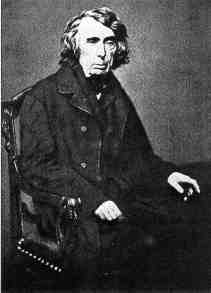
| "at the time of the Declaration of Independence, and . . . Constitution . . . had for more than a century before had no rights which the white man was bound to respect; and . . . might justly and lawfully be reduced to slavery for his benefit . . . ." |
Adams
| Burnett
| Chase
| Fee
| Garrison
| Green
| Horsley
| Lay
| Lincoln
|
Mansfield
| May
| Mellen
| Otis
| Patton
| Rankin
| Rogers
| Sandiford
| Sewall
|
Shaw
| Smith
| Spooner
| Stewart
| Stowe
| Tappan
| Tiffany
| Tucker
| Weld | |
Or perhaps he hallucinated; tobacco is an hallucinogen; early records show that some Indians used it for that very purpose, says Jan G. R. Elferink, "The Narcotic and Hallucinogenic Use of Tobacco in Pre-Columbian Central America," 7 Journal of Ethnopharmacology 111-122 (1983), and references therein). Or perhaps Taney displayed psychopathology; or criminality; or brain-damage-induced impairment of linear reasoning; or tobacco-intoxication; or Alzheimer's-type memory loss, or held the creationist or untermenschen viewpoint later termed "Nazi"; or rejected the Bible principles cited in Acts 2:44-45 and 4:32, 34-35 (details).
Each of the above would meet the criteria of insane: unable “to appreciate the wrongfulness of his conduct,” and “to conform his conduct to the requirements of the law.”—People v Matulonis, 115 Mich App 263; 320 NW2d 238 (1982), as he was a tobacco user thus not “a person of normal sensibilities,” Aldridge v Saxey, 242 Oregon 238; 409 P2d 184 (1965).
This would be another example of “how disease . . . has frequently changed the course of civilization.” See Frederick F. Cartwright (medical historian) and Michael D. Biddiss (history professor, Cambridge), Disease and History (New York: Dorset Press, 1972). See also Howard N. Simpson, Invisible Armies: The Impact of Disease on American History (Indianapolis: Bobbs-Merrill, 1980).or exceeding constitutional authority; or lack of impartiality by going outside the record evidence; or "conservative" (actually Confederate) type reasoning using tradition and practice to override the rule of law (i.e., the opposite method than that cited by honest judges in, e.g., the 1903, 1932, 1979 and 1982 cases).
| Note standard psychiatric data, the “special [warped] laws of logic that the schizophrenic uses in support of his complexes or ideas, which to us seem delusional. . . . keep in mind that” what “seems absurd to us is expressed . . . by the patient . . . To him, his idea is rational, unquestionable, based on an absolute conviction of its truth. His unconscious motivation, a desire that cannot be controlled . . . obliges the patient to use unusual ways of thinking,” p. 65, Understanding and Helping the Schizophrenic (New York: Basic Books, 1979), by Dr. Silvano Arieti. At 46, “The patient does not attempt to demonstrate the validity of his ideas. He 'knows'; that is enough. His knowledge comes from an inner, unchallenged certitude that does not require demonstration. 'He knows.'”
At 24, “To date, it has not been demonstrated that the schizophrenic can be taught or coerced or convinced not to have these thoughts,” says Schizophrenia: Symptoms, Causes, Treatments (New York: Norton, 1979), by Kayla Bernheim, Ph.D., and Richard Lewine, Ph.D. No evidence could persuade slavers! And they did indeed hold “special [warped] ideas of logic” by which to read into the Constitution their pre-conceived notions. See a summary of slavers' warped “laws of logic” in L. Spooner's book Unconstitutionality of Slavery, supra, pages 205-236. Spooner wrote a rebuttal of those warped “laws of logic.” But reasoned rebuttal was to no avail; the “psychotic” South could not “be taught or coerced or convinced.” Even in the 21st century, its “unreconstructed” adherents continue to hold the long-discredited notions! |
| For other references on the Dred Scott decision, see, e.g.,
Pro-slavery apologists support the Dred Scott decision as correct interpretation of the pre-13th Amendment Constitution. In fact, however, the Constitution means what it says, not what the Supreme Court here falsely claimed it meant, an abolitionist point, later in essence upheld in Standard historical analysis routinely cites government's law violations: |
that was a major factor in the election of Abraham Lincoln as President three years later, in 1860.the "book-law" precluding slavery legality evil effects and applications of the Dred Scott decision, and that the Supreme Court, the world's worst court, had knowingly, grossly, egregiously lied (in the 1857 Dred Scott case) to uphold slavery by ignoring competent analysis and centuries of precedents,
 Prior to the egregious lying Dred Scott decision, Lincoln (1809-1865) had predicted that an anti-slavery president would likely not be elected by 1864, perhaps not even in his lifetime, but in that of a youth (Noah Brooks) to whom he was speaking in 1856. See Noah Brooks, Washington in Lincoln's Time (New York: Century Co, 1895). But shortly thereafter, HE was himself elected!!!
Lincoln realized that the common law "is not much known except among lawyers." "Speech at Peoria, 16 Oct 1854," Nicolay, John G. and John Hay, eds., Complete Works of Abraham Lincoln, Vol II (New York: Francis D. Tandy Co, 1894 and 1905), p 222. As slaves did not know their common law rights (having been denied the right to read and write), "Who will inform the negro that he is free? Who will take him before court to test the question of his freedom? In ignorance of his legal emancipation he is kept . . . ." (p 221). (George Mellen in Unconstitutionality of Slavery, supra, pp 431-432, had said the same thirteen years before.) Lincoln likened pro-slavery arguments to "the old argument for the 'divine right of kings.' By the latter [argument], the king is [allowed] to do just as he pleases . . . the white man is to do just as he pleases with his black slaves. . . . The two things are precisely alike. . . ." And he rejected the pro-slavery arguments, pursuant to morality and the common law, which rejection was widely known and disseminated nationwide. For related analysis of the 'divine right of kings' notion infesting Southerners, see Edward C. Rogers, Slavery Illegality, supra, p 60. See also Lincoln's 26 June 1857 Speech analyzing the Dred Scott decision. |
- Speech, Sen. Alfred Iverson, Cong Globe, 36th Cong, 2 Sess, 10-11 (Dec 1860);
- the Charleston (S.C.) Mercury (7 Jan 1861);
- Benson J. Lossing, Pictorial Field Book of the Civil War (NY: 1868); and
- Edward A. Pollard, Life of Jefferson Davis, with a Secret History of the Southern Confederacy (Philadelphia, 1869).
| The underlying cause of the Civil War was slavery. See references such as Adam Goodheart, 1861: The Civil War Awakening (2012). The war was "not just a Southern rebellion but a nationwide revolution" to free the country of slavery and end paralyzing attempts to compromise over it. The revolution began long before the war's first shots were fired. But it worked on the minds and hearts of average whites and blacks, slaves and free men. By 1861 it had attained an irresistible momentum. Goodheart shifts focus away from the power centers of Washington and Charleston to look at the actions and reactions of citizens from Boston to New York City, from Hampton Roads, Va., to St. Louis, Mo., and San Francisco, emphasizing the cultural, rather than military, clash between those wanting the country to move forward and those clinging to the old ways. War would be waged for four bitter years, with enduring seriousness, intensity, and great heroism, Goodheart emphasizes."
In the face of this, the pro-slavery South decided to secede. In this context, the immediate cause of the Civil War was South Carolina's shooting at a U.S. ship in January 1861, the Star of the West, and shooting at U.S.-bought land and property, Fort Sumter, in April 1861. Remember Pearl Harbor? The "day in infamy"? Japan shooting at Americans without first having declared war? That's what happened to begin the Civil War. When people start shooting at you, their "reasons" (Japan had reasons; Germany in World War I had "reasons" for shooting at the Lusitania)—their 'reasons' aren't the cause of the war. Their shooting is! Remember your History Class? Sen. Seward had been expected in the South to be nominated for President, not Lincoln. Remember Pearl Harbor? What if Roosevelt had not shot back, just told Japan, 'you can have Hawaii, and California, Oregon, Washington.' That's about how it was back then, before the Civil War. The U.S. under outgoing President James Buchanan, retreating and retreating! Surrendering not just fort after fort, but state after state. Lincoln was a near-pacifist, did nothing to recover a thing. Nothing . . . until the South did worse than Japan at Pearl Harbor. Japan simply shot and ran. South Carolina shot and took, took over Fort Sumter. Only then did Lincoln react, and then asking for a mere 75,000 volunteers!--even though Stephen O. Douglas recommended 200,000! Southerners were determined to have conquest, conquest after conquest, to spread slavery, unconstitutional slavery. They'd even commit treason for it.
Pres. Taylor's attitude was to "defend [the Union] not by compromises [with slavers], but by putting down treason with the strong hand. Had he lived another year, either the war of secession would have taken place [immediately, i.e., by 1851], or it would never have taken place at all. But he died [of no known natural cause but of apparent poisoning July 1850] and so made way for the immortal career of Lincoln." Hawthorne, p 880. But sadly, only after a series of three cowardly spineless Presidents (Fillmore, Pierce, Buchanan) whose depravity led Southrons to feel they could commit treason (including apparent poison-murder of President Taylor) and get away with it. |
 In 1850 under President Zachary Taylor (a former general), "treason" was the word. He specifically applied it to military officers who (like Robert E. Lee a few years later) would not stay loyal. Taylor said of such, "hang him as I did the deserters and spies at Monterey"--Julian Hawthorne, The History of the United States From 1492 to 1912 (New York: P. F. Collier & Son, 1898), p 875.
| Incidently, this extreme unconstitutional and immoral opposition by the Supreme Court to the Constitution's clauses against slavery, was a factor in Lincoln's Emancipation Proclamation. People would sue then as now; Lincoln knew that if he simply honestly cited Article 2 § 3 ("take care that the laws be faithfully executed"), the immoral Supreme Court, or undeed any hostile court, might declare his taking such "care" meaningless or unconstitutional. In fact, a number of lawsuits did occur:
So when Pres. Lincoln issued the above-cited Emancipation Proclamation, he carefully made it a purely military order in his capacity as Article 2 § 2 Commander-in-Chief. It is well-established that armies can capture enemy personnel and confiscate enemy property, e.g., troops' weapons, indeed, whatever they use to make war. Lincoln was also familiar with the book by William E. Whiting, LL.D., The War Powers of the President, and the Legislative Powers of Congress in Relation to Rebellion, Treason and Slavery (Boston: John L. Shorey, 1862), citing the power to abolish slavery in war-time enemy territory. As the Confederacy, enemy territory, was calling itself a separate nation, and calling slaves "property," using them to carry on the war effort, Lincoln could take them at their word! He could of course, note that they were using slaves for military purposes, themselves citing slavery as the only cause of the war.
So he carefully worded the Emancipation Proclamation to be a typical military order, only capturing / confiscating "property" (freeing slaves) in enemy territory or battle staging areas! Lincoln thus wisely made it unlikely that the Supreme Court could overrule it. Lincoln could not know that the dishonest Taney would die the next year, and that he (Lincoln) could then replace him with a more honest person, Salmon P. Chase.
For more analysis on the constitutionality of Lincon's actions, see, e.g., Prof. Daniel Farber, Lincoln's Constitution (Chicago: Univ of Chicago Press, 2003).
In an Emancipation-Proclamation-related case, a court specifically ruled that the Emancipation Proclamation was a war measure, upholding its constitutionality, and noting that pursuant to international law (cited in authoritative texts of the era, e.g., Henry Wheaton, Elements of International Law: 2nd annotated ed. by William Beach Lawrence [London: S. Low, 1863], p 604, specifically cited by Dorris v Grace, 24 Ark 326, supra), a nation at war can legally take any measure to strengthen itself or weaken its enemy, Buie v Parker, 63 NC 131, 146, supra.
The other cases listed, also had the Emancipation Proclamation as an issue (in context of cases on, e.g., mortgages, inheritances, crime prosecutions, etc.) and deemed it proprio vigore (what it said it was, a war measure effective progressively by force of arms). (This was so even in cases such as Andrews v Page, 50 Tenn 653, supra, that defied the prior well-reasoned precedents, and denounced it (the Proclamation) as somehow unconstitutional!, and gratuitously blaming the abolitionists!)
Truly Lincoln, like any good lawyer, and military commander, had drafted it, the military seizure order, carefully and well to preclude its being overridden by corrupt judges! And helped end the unawareness of rights, that he had lamented a decade earlier.
|
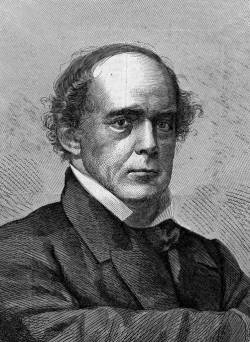 Chase was
 Hubert Languet (1518-1581) and Philippe de Mornay, seigneur du Plessis-Marly (1549-1623), alias Junius Brutus, Vindiciae contra Tyrannos (1579 translated 1648) (background at www.constitution.org/vct/vind_laski.htm and history.wisc.edu/sommerville/367/Vindiciae.htm) Jesuit Fr. Juan de Mariana (1535-1624), De Rege et Regis Institutione (Toledo, 1598) (background at cepa.newschool.edu/het/profiles/mariana.htm and www.library.georgetown.edu/advancement/newsletter/66/bookburning66.htm) (killing the manifestly evil) Scottish religious reformer John Knox (1505-1572), declared it both lawful and positively necessary to kill rights betrayers John L. Somers, Daniel Defoe, et al, Vox Populi, Vox Dei (London: T. Harrison, 1709), providing historical background David Walker in Appeal to the Coloured Citizens of the World (28 September 1829), elaborated this approach. Rev. Henry Highland Garnet (1815-1882), 16 August 1843, An Address to the Slaves of the United States of America (Troy, New York: J. H. Tobbitt Pub, 1843 and 1848) (elaborated this 1 Timothy 5:8 Christian duty with respect to slavers, to halt their assaults on slaves' families. Note the same concept expressed thus a century later: “How we burned in the [soviet] prison camps later thinking: What would things have been like if every police operative [slaver], when he went out at night to make an arrest [a capture], had been uncertain whether he would return alive? If during periods of mass arrests [captures] people had not simply sat there in their lairs, paling with terror at every bang of the downstairs door and at every step on the staircase, but had understood they had nothing to lose and had boldly set up in the downstairs hall an ambush of half a dozen people with axes, hammers, pokers, or whatever was at hand? The organs [police / slavers] would very quickly have suffered a shortage of officers and, not withstanding all of Stalin's thirst, the cursed machine [arrest system] would have ground to a halt.”—Aleksandr Solzhenitsyn, The Gulag Archipelago (New York: Harper & Row, 1973), Chapter 1, pp 3-18, especially p 13. (book on soviet-era concentration camps). And see also "Free at Last" (BBC Documentary, March 2007), on "history of black and African resistance to slavery." Rev. Theodore Parker in John Brown's Expedition Reviewed in a Letter from Rev. Theodore Parker at Rome to Francis Jackson, Boston (Boston: The Fraternity, 1860), defended John Brown's rescue actions and the right of slaves to kill slavers. Abolitionist Attorney Wendell Phillips advocated this approach in U.S. jury trial context. Phillips knew: "What supports slavery? Northern bayonets, calming the masters' fears. . . . Disunion [ceasing the North's aiding and abetting slavers] leaves God's natural laws to work their good results. . . . Under God's law, insurrection is the tyrant's check [restraint]. Let us stand out of the path [get out of the way], and allow the Divine law to have free course [i.e., slave insurrection, self-rescue]." Abolitionist Henry C. Wright said, "Resistance to slaveholders and slavehunters is obedience to God, and a sacred duty to man. . . . [It is] our right and duty . . . to instigate the slaves to insurrection." "Rebellion to tyrants is obedience to God."—John Bradshaw (1602-1659). See also the "original grant" doctrine; the Domitian assassination precedent; and examples of what happens when people are submissive, non-resistant toward tyrants, thus enabling even more tyranny, as shown by Aleksandr I. Solzhenitsyn, The Gulag Archipelago (New York: Harper & Row, 1973), Chapter 1, pp 3-18. Note especially p 13: "How we burned [contemplated] in the prison [slave] camps later thinking: What would things have been like if every police [slave] operative, when he went out at night to make an arrest [to enslave], had been uncertain whether he would return alive? If during periods of mass arrests [enslavements] people had not simply sat there in their lairs, paling with terror at every bang of the downstairs door and at every step on the staircase, but had understood they had nothing to lose and had boldly set up in the downstairs hall an ambush of half a dozen people with axes, hammers, pokers, or whatever was at hand? The organs [secret police / slavers] would very quickly have suffered a shortage of officers and, notwithstanding all of Stalin's thirst, the cursed machine would have ground to a halt."
Nat Turner's August 1831 in Virginia Rev. John Rankin's for decades Capt. Jonathan Walker's in 1844 Drayton-Sayres' in April 1848 Rev. John G. Fee's analysis in 1851 Passmore Williamson in June 1855 St. John Brown's 16 Oct 1859 at Harper's Ferry (see 1909 biography, John Brown, by William E. B. DuBois, Ph.D. [1868-1963]; and his 1853 activism; contrast with the ravings of the pro-slavery sentencing judge) the Underground Railroad in, for example, Vermont and the entire "Underground Railroad."

| Rescue doctrine was of course denounced by slavers! See, e.g., "An Incendiary Circular" (Dec 1859). |
| Significant numbers of slaves engaged in self-rescue type activities. You can understand that women being raped, women being kidnapped, have a right, even a duty, to kill their rapist, their kidnapper, thus end the crimes in process and foreseeable.
Slavery was Naziesque death camps writ large and long. It didn't end, like Naziism, in a mere twelve years. Slavery was Dachau, Auschwitz, Buchenwald, for the foreseeable future, century after century, no end in sight, as per Southern expansionism. Slavers, tobacco planters, had no scruples about the killings of tens of millions then, and now. Note also examples of lynchings showing a pattern of disrespect for life. See also history of U.S. lynchings. Is it not agreed now, that people at Dachau, Auschwitz, Buchenwald, should have killed their oppressors? not gone so passively to the slaughter? should have killed the guards? the commandants? the officials' families resident at the camps? whomever necessary to destroy them, their morale, and end the genocide. Buie v Parker, supra. Is it not now felt that the camps themselves should have been bombed by the Allies? Slavery is, viewed in depth, war. Slavery is war. Mitchell v Wells, 37 Miss 235, 282 (1859) (dissent by J. Handy). Slavery is multiple acts of war. Slavery is aggressive war, war of aggression. Slavers' war violates standard laws of war and conducting it, i.e., slavers did not wear uniforms, did not respect civilians, did not declare war, mass-murdered civilians, did not treat slaves even up to 'prisoner of war' standards, mass-murdered prisoners, etc. Remember Hiroshima? Nagasaki? Hamburg? Dresden? In dealing with nations at war, America and England have shown that it is acceptable to bomb enemy cities, to fire-bomb enemy cities, to atomic-bomb them, to mass kill enemy women and children. They are not mere unexpected "collateral damage," they are known in advance to be foreseeable casualties, they are legitimate targets. The goal is to destroy aggressor morale, thus end the war. Buie v Parker, supra. Slaves (when you remember they are targets of slavers' war of aggression), have the same war-fighting rights, indeed, the right to achieve the same purpose, the ending of the slavers' war. This includes the right to use the same American/English war methods, including killing not only slavers, but their women and children. Remember, killing only the camp commandant, the slaver himself, leaves the women and children as heirs, fellow soldiers, continuing the slaver war on society. In combat, you shoot the enemy until they die or surrender. You shoot them even when they are fleeing, you shoot them in the back. You know that their flight indicates their intent to return fire at you, in the future. Your right to shoot, and keep shooting, continues until the enemy is wholly dead or surrendered. Note Harriet Beecher Stowe's example of pioneers escaping Indian captivity. Deaths of slavers, in the following case list, are thus referred to as "executions" (though called by the slaver courts, "murders"!) Slave cases exercising the right, nay, duty, to escape captivity, stop rapes and kidnaping, end slavers' war, by killing slavers and their accomplices and/or families, are documented in cases such as the following: |
| Rev. John Rankin (1823) | Rev. Beriah Green (1836)
| Rev. John G. Fee (1849)
| Lewis Tappan (1850)
| Rev. William Goodell (1852)
| Rev. George Cheever (1859)
| Rev. William Patton (1859)
| John G. Whittier (1859)
| |
| Southern politicians still make pretenses linking slavery and states' rights, says Stanley Crouch, "Trent Lott's Link to Racist Group Has Real Pedigree," New York Daily News (6 Jan 1999). |
| "I treat the subject lightly because to a [trained analyst] it [the Southern claim] is so totally ridiculous as hardly to warrant being taken seriously. To treat such testimonies [claims] with anything else than the ridicule they deserve does not serve, and indeed has not served, historical truth. . . . The whole story . . . is totally farcical."—Prof. W. Hugh Thomas, M.D., The Murder of Adolf Hitler (New York: St. Martin's Press, 1995), p 112. |
- the Lousiana Purchase,
- causing the War of 1812,
- obstructing independence for Cuba,
- the aggression against Florida,
- the conquest of Texas,
- the war of aggression against anti-slavery Mexico,
- establishing a monarchy / aristocracy with feudalist nobility aspects, e.g., "masters" and "serfs" (worse, outright "slaves") in violation of the Constitution's anti-monarchy and republican government clauses,
- then imposing this nobility having slavery into new previously free territories,
- vengeful and pervasive throughout the nation, etc.
| "a great Southern confederacy [to] extend its sway over adjacent tropical regions, over the West Indies, Mexico & Central America, with slavery as its foundation & cotton, sugar, rice, & tobacco [crops]."—Page Smith, Ph.D., The Nation Comes of Age (New York: McGraw-Hill Book Co, 1981), p 1172. |
| "control the newly proclaimed Confederate Territory of Arizona . . . the first step in the Confederacy's cherished plan to seize a port on the Pacific Ocean, thereby achieving its own manifest destiny and gaining access to the fabulous gold mines of the West."—David H. Rosenberg, "Confederate Manifest Destiny in New Mexico," 13 America's Civil War (#3) 51-57 (July 2000). |
| "a congressional slave code [for territories, to] provide ironclad protection for our [slave] property in whatever new slave territory we annex—Cuba, Mexico, or Central America. If the North rejects our demand [to expand slavery], I would regard it as grounds for disunion."—Allan Nevins, Emergence of Lincoln, vol. 1, p 416. |
| "the whole tropical belt of the Western hemisphere," colleague Senator Robert Toombs agreed, "It's true; the whole of it."—References, see:
|
| "extending their empire across this continent to the Pacific, and down through Mexico to the other side of the great gulf, and over the isles of the sea . . . presenting to the world the glorious spectacle" |
of a greatly expanded slavery!! These sex criminals didn't want to stop their crimes; they wanted to declare war on Mexico again, and Cuba, South America, Caribbean, and Asian nations, to have far more victims in which to continue their vile and immoral actions!
The Charleston (City) Gazette, cited by James G. Birney, The American Churches: The Bulwarks of American Slavery (1840), p 7 Senator Henry Clay, cited by Rev. William Goodell, Slavery and Anti-Slavery (1852), p 140. Pro-slavery congressmen, referenced by Rep. Owen Lovejoy, "The Barbarism of Slavery" (5 April 1860), p 206.
"'The gates of the Chinese empire must be thrown down by the men from the Sacramento and the Oregon, and the haughty Japanese tramplers upon the cross be enlightened in the doctrines of republicanism and the ballot box. The eagle of the republic shall poise itself over the field of Waterloo [in Europe], after tracing its flight among the gorges of the Himalaya or the [Russian] Ural mountains, and a successor of Washington ascend the chair of universal [planet-wide] empire.'" Source: Prof. Joseph R. Conlin, The American Past: A Survey of American History (Vol I, to 1877), 6th ed. (Fort Worth: Harcourt College Pubs, 2001), pp 396-397.
 Ed. Note: Incidently, observe historical results of such threats. The U.S. threat to Japan, when commenced to be carried out by pro-slavery President Franklin Pierce, triggered Japan's self-defensive fear and armament leading to Pearl Harbor, says David Bergamini (1928-1983), Japan's Imperial Conspiracy (New York: Morrow, 1971).
The Southerner-slaver role in leading to Pearl Harbor is clear. Ed. Note: Incidently, observe historical results of such threats. The U.S. threat to Japan, when commenced to be carried out by pro-slavery President Franklin Pierce, triggered Japan's self-defensive fear and armament leading to Pearl Harbor, says David Bergamini (1928-1983), Japan's Imperial Conspiracy (New York: Morrow, 1971).
The Southerner-slaver role in leading to Pearl Harbor is clear. |
the section of “The Origins of Slavery Expansionism,” in Prof. Eugene Genovese, The Political Economy of Slavery (Pantheon Books, 1961, 1963, 1965); and God Against Slavery, by Rev. George B. Cheever, D.D. (1857), p 172: “[I]nstead of staying it [halting slavery] where it is, they [Southern slavers] propose its universal extension. There is territory enough to carve out twenty-nine new States in the region proposed to be set open to the freedom [expansion] of slavery. There are no geographical barriers to the existence and the lust of power; it overrides every thing; there is no climate on earth unfavorable to it. Freedom is a flower that you must cherish; but slavery is a weed, as [Edmund] Burke [1729-1797] once truly said, that you may have anywhere; only scatter the seed. The question before us is as to the deliberate national extension of this system.”
| Slavers, like children who never grow up mentally, had a mind-set parents recognize in toddlers. "Toddlers don't yet understand the niceties of ownership. If they see something they want, they'll take it without a second's thought—such a common behavior [as the toddler] doesn't see anything wrong with what he's done."—Lawrence Kutner, Ph.D., "How to Discipline Someone Else's Child," Parenting (March 2000), pp 119-123, at 120. |
- Rev. Parker Pillsbury, Forlorn Hope (1847), pp 81 and 381
- Senator Thomas Corwin, Unjust National Acquisitions (1847)
- Rep. Abraham Lincoln, Anti-Mexican War Speech (1848)
- Rev. William Goodell, Slavery and Anti-Slavery (1852), pp 272-305.
- Shanley v Hervey, 2 Eden 126 (Chancery, March 1762) ("As soon as a man puts foot on English ground, he is free: a Negro may maintain an action against his master for ill usage, and may have a Habeas Corpus, if restrained of his liberty")
- South Carolina Law, 1740
- Payments in the 1781-1784 Era (Details)
- Abolitionists' Recommendations in 1833
- Gordon v Duncan, 3 Mo 385 (Missouri, 1834) (a back pay/reparations case during pendency of successful case of slave winning freedom)
- Benjamin Shaw's 1846 recommendation for reparations
- Rev. Silas McKeen's 1848 reparations' principles
- Rev. John Fee's 1851 recommendation for reparations with Mosaic precedent
- General Sherman's 16 Jan 1865 Reparations Order 15 (providing land grants, reference his Memoirs of General William T. Sherman, vol. 2 [New York: 1875], pages 730-732)
- "Every year since 1989, Rep. John Conyers, D-Detroit, has pushed . . . for a federal law ordering a study of reparations," says The Macomb Daily, p 9A (10 July 2006).
- Mary Frances Berry, My Face is Black Is True (2006) (history of over 600,000 ex-slaves petitioning the U. S. government for ex-slave pensions, with committees from both houses of Congress supporting them, but ultimately not passed; in essence, there was strong effort for reparations for slavery while the bulk of the last generation of slaves was still alive; sadly, they were shamefully treated).
- Steps and actions by Churches that can be done now.
- The recent reparations request case, Deadria Farmer-Paellmann et al v Fleetboston Financial Corp, Aetna Inc, CSX, et al (E D NY, 26 March 2002), and winning decision Re: African-American Slave Descendants Litigation (CA 7, 13 Dec 2006. (News Article).
- "14 Caribbean nations sue European countries for slavery reparations" (27 September 2013)
- The McCormick Tribune Freedom Museum, 455 N Michigan Ave, Chicago, Ill. (reparations museum).
| See also reparations-related writings, e.g.,
|
| Modern examples of tracing back in such manner include
|
| Slavery involved constitutional rights denials. There was, e.g., no "procedural due process" in terms of enslaving people.
When there is such a violation (no due process), the injured person is entitled to damages even if not harmed. Slavery of course involved holocaust-level harm.
For a discussion on even the 'no-harm' situation, see Carey v Piphus, 545 F2d 30 (CA 7, Ill, 1977) rev'd and remanded 435 US 247; 98 S Ct 1042; 55 L Ed 2d 252 (1978) (damages award as procedural due process is an "absolute" constitutional right).
See also Garner v Memphis Police Dept, 710 F2d 240, 248 (CA 6, 1983) ("the remedying of deprivations of fundamental constitutional rights must be of prime concern to courts and other governmental bodies. A rule imposing liability despite good faith reliance insures that if governmental officials err, they will do so on the side of protecting constitutional rights. It also serves the desireable goal of spreading the cost of unconstitutional governmental conduct among the taxpayers who are ultimately responsible for it."), citing Bertot v School District No. 1, Albany County, 613 F2d 245, 251 (CA 10, 1979) (good faith reliance on the prior law of the circuit provided no independent protection from liability for wrongful act). Slaves had a right to proper notice of charges! says the case of Josephine, a slave v State of Mississippi, 39 Miss (10 Geo; 19 Miss Annot Ed) 613, 647 (Oct 1861): The right to a properly drafted statement of charges is "a substantial right . . . and not a mere question of form or proceeding." Since no such notices were provided to slaves, there was never any lawful slavery, never any constitutional slavery. One way to do some significant portion of "reparations" is to transfer the property titles from the slavers to the slaves on the plantations and other slave locations, as of the slavery ending time frame. This title transfer would be done retroactively, and of course, on paper, for step one. Thus the slaves of the past would be recorded as the actual owners. Then following standard inheritance principles, the inheritance would pass on down the line of descent, to the current descendants. For “the practical meaning of the phrase 'equality of opportunity' . . . [t]he most popular metaphor, used by Lyndon Johnson among others, was that of the shackled runner: Imagine a hundred-yard dash in which one of the two runners has his legs shackled together. He has progressed ten yards while the unshackled runner has gone fifty yards. At that point, the judges decide the race is unfair. How do they rectify the situation? Do they merely remove the shackles and allow the race to proceed? Then they could say that “equal opportunity” now prevailed. But one of the runners would still be forty yards ahead of the other. Would it not be the better part of justice to allow the other runner to make up the forty-yard gap; or to start the race all over again? That would be affirmative action toward equality.”—Eugene J. Dionne, Jr., Ph.D., Why Americans Hate Politics (Simon & Schuster, 1991), p 90. |
| Even the minimal remedy known as "affirmative action" is under attack, for example, in Michigan. But it fortunately has defenders. |
"The province of human government is to protect—not to destroy man's natural rights, but more perfectly secure them to him," says Rev. John G. Fee, Sinfulness of Slaveholding (1851), p 6. "Upon the law of Nature and Revelation all human laws depend." "No human laws should be suffered to contradict these." "Nay, if any human laws should allow, or enjoin us to commit a violation of the revealed law, we are bound to transgress that human law, or else we must offend both natural and revealed law."—Vol. I. pp. 28, 29. (Cited by Rev. John G. Fee, Anti-Slavery Manual (1851), pp 70-72.) Government aiding and abetting private individuals in violating a right is unconstitutional, i.e., when
“. . . States have made available to [private] individuals the full coercive power of government to deny” other individuals their rights.—Shelley v Kraemer, McGhee v Sipes, 334 US 1, 19; 68 S Ct 836; 92 L Ed 1161 (1948).Indeed, “denial of [fundamental rights] would, upon principles of public law, be just cause of war.”—Mitchell v Wells, 37 Miss 235, 282 (1859) (dissent by J. Handy). “This [allowing rights denial via slavery, unconstitutional detentions] was allowing a state of war de jure in the body politic, which could not be prevented from becoming a war de facto to the destruction of the commonwealth [society].”—Edward C. Rogers, Slavery Illegality (1855), p 9.
“The very act [of enslaving] was a declaration of war upon human [kind].”—Rev. Beriah Green, The Chattel Principle (1839), p 18.
“The moral law, like every other law, comes not to confer rights, but to protect rights already existing. It presupposes . . . certain rights [already exist] to be guarded, not given . . . .”—Rev. John G. Fee, Sinfulness of Slavery (1851), p 11.
| The International Reparations Movement Website
The Legal Basis of the Claim for Reparations by Lord Anthony Gifford, QC, Jamaican Attorney at Law The NCOBRA Reparations Action Coalition More on Slavery at "About.com" More on Reparations at "About.com" The Debt: What America Owes to Blacks (New York: Dutton, 2000) by Randall Robinson, President, TransAfrica Forum The Reparations Assessment Group |
| Note that "the first moral objections came from the North . . . The first realistic objections to slavery came in the South, and there was a long and strenuous campaign to stop it. But it was not waged in the conscience of the South," p 72. |
| Descriptions of Slavers At The Time |