The Cloning Of Dolly
In February 1997, the Roslin Institute and PPL Therapeutics plc announced the first production of Dolly, the cloned sheep who was the first mammal to be cloned from the somatic tissue of an adult. Dolly was of almost the same genetic composition as the sheep from whose cells she was developed, but she was not genetically engineered as such. Five months later, on 24 July, PPL announced that Polly, a genetically engineered lamb, had been produced by the same method of nuclear transfer that had produced Dolly. In addition to her usual complement of sheep genes, she also contained a human gene which had been added to the cells while they were still a cell culture. The full details of the work have yet to be published, but this represents an important development.
The gene is one intended to produce a therapeutically useful protein in the milk of the sheep. Genetically modified sheep of this general kind have been produced by Roslin and PPL for a number of years, using a "conventional" method of genetic manipulation known as micro-injection. Now this manipulation has been achieved by the Roslin's nuclear transfer method. This was the next logical step
for Roslin and PPL from producing Dolly, and although not as dramatic a piece of science as Dolly, it represents possibly a more important breakthrough in what it could mean for animal genetic engineering. Its technical significance is that in principle it gives geneticists a far more precise way of doing genetic manipulation, and a far wider range of genetic changes which they could do in farm animals, compared with the limited and rather "hit and miss" methods which have been used hitherto.
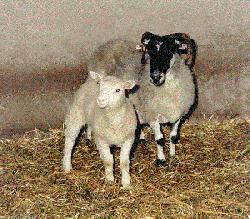
Dolly is the most famous sheep in the world. She looks much like any other sheep, but she has been cloned from another adult sheep. Inside every cell,her genetic make up is the same as a ewe of a different generation. Scientists at the Roslin Institute here in Edinburgh have rewritten the laws of biology, and have become the focus of an unprecedented media circus as a result.