|
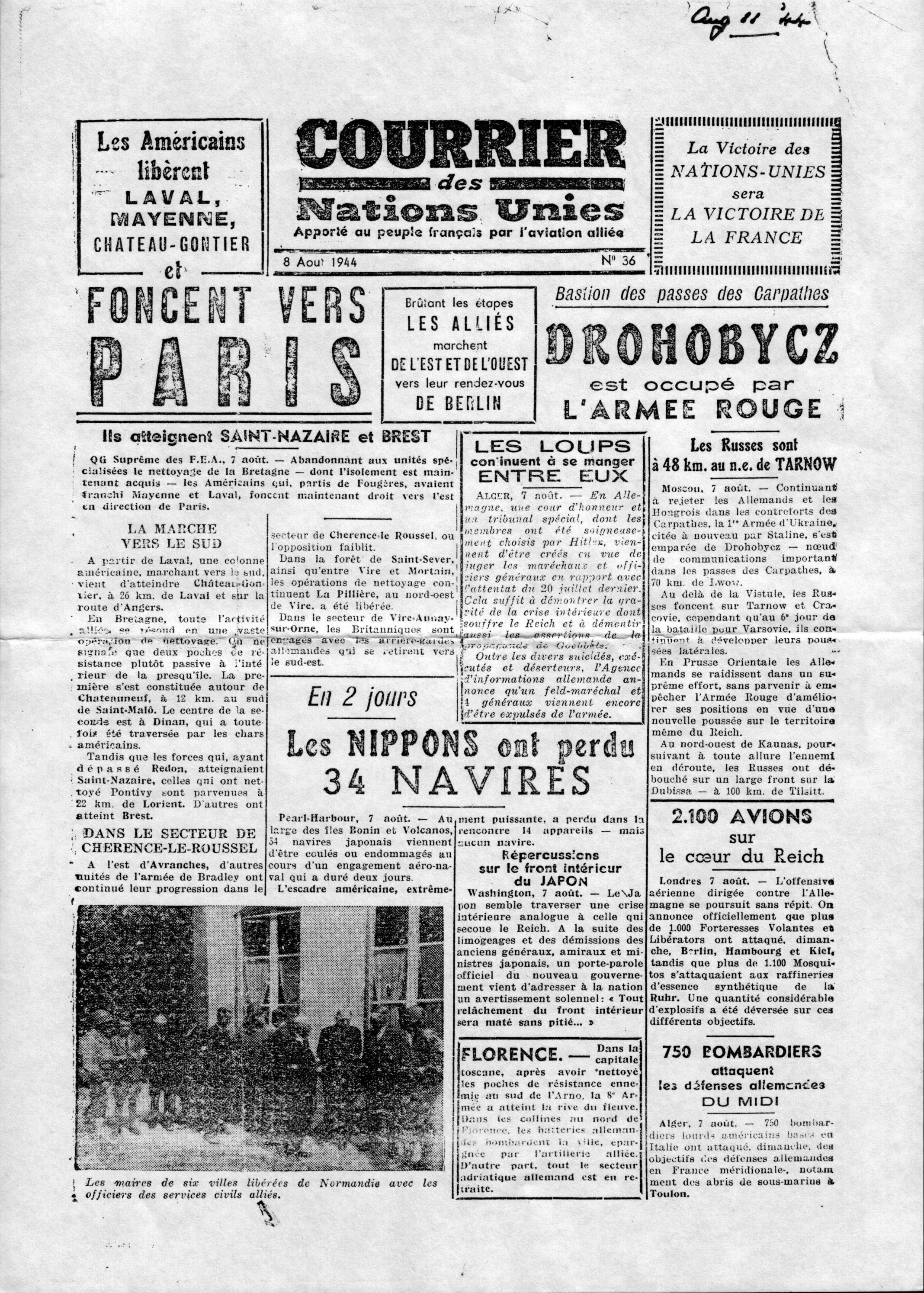
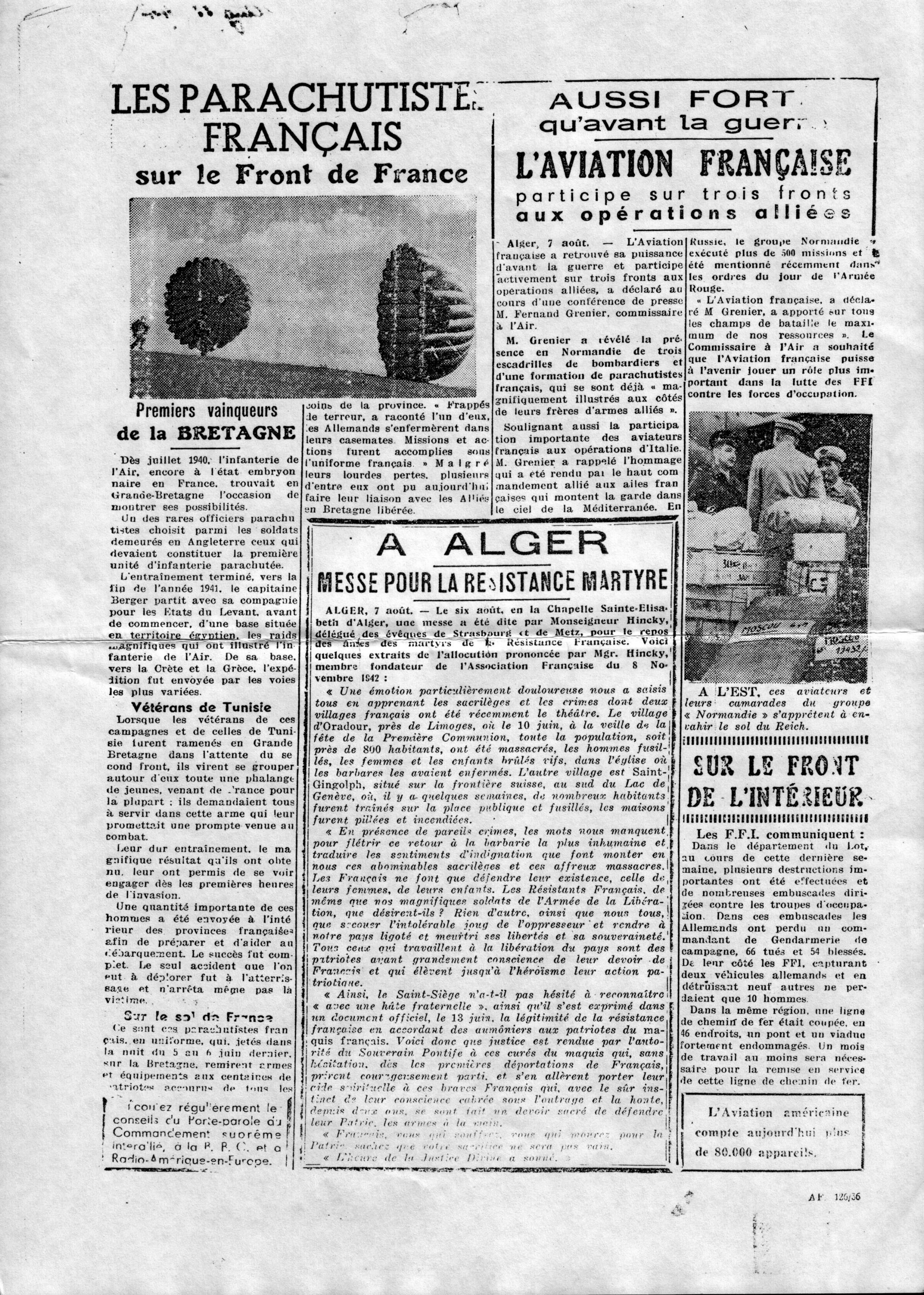
The History of 624 (SD) Squadron Documented records of 624 Squadron are very limited due to the secrecy of the work involved. Most orders and instructions were single copy and hand written. And information recorded here is mostly told from the men who served with the "Unsung Heroes of 624". Due to the span of years of secrecy surrounding these matters, only now is the story starting to unfold. Due to this, accuracy of information may , at times, slightly deviate from how it actually was this is not due to artistic license but lack of documented proof and use of memories and is aimed to give as accurate account as possible. 1575 (SD) Flight was formed at Royal Air Force Tempsford on 28 May 1943 for Special Operations Executive Duties. At this time it was equipped with 4 Halifax and 2 Ventura aircraft and on 4th June 1943 it transferred to Maison Blanche in North Africa. On 13th June they commenced operations over Corsica with Halifax EB141 piloted by F/Lt Ruttledge and over Sardinia EB140 piloted by F/Lt Austin who at that time was Commanding Officer. The maritime section of the flight moved to Blida via Algiers and until September continued Special Duties sorties over Corsica, Sardinia and the Italian mainland. On 7th September 1943, all personnel, equipment and aircraft transferred to Blida where 1575 Flight was disbanded and 624 ( SD) Squadron RAF was formed under the command of Wing Commander C. S. G. Stanbury DSO, DFC. Under the control of North West African Coastal Airforce, operating over Southern France, Corsica and Sardinia. Operations began using 14 Halifax aircraft. These were a mix of B Mk ll & Mk V. On 21/22 September Halifax's "G EB188 F/Lt Austin" and "EB196 F/Lt Rutledge" flew sorties dropping an OSS team. On 2nd October a detachment was moved to an advanced base at Protville Tunisia and commenced operations into Yugoslavia. On 15th October another detachment of 2 Ground Crews and Halifax E EB197 moved to Malta for operations over Czechoslovakia. E EB197 was later replaced by EB197. On 16th October the detachment at Protville moved to Sidi Amor Nr Tunis and on 2nd November the rest of the squadron arrived. From here a detachment of 6 Halifax's was sent to Tocra, Nr Benghazi, Libya. On 21st November the squadron moved to Brindisi in Southern Italy as part of 334 ( SD ) Wing Mediterranean Allied Air Force. From here it operated over the Balkans and Northern Italy and a detachment of 4 Halifax's was sent to Blida to operate over Southern France. By this time the Squadron was operating under extremely difficult conditions. It was under strength in aircrew, aircraft and transport vehicles (even some of those that were in use were in a very poor condition). Even the refueling facilities were limited to one 900 gallon bowser and even this had to be filled by hand at a fuel dump 10 miles away. Even so during January 1944 , 93 missions were carried out and 72.5% of these were successful. On 19 February 1944 the squadron returned in full with 18 Halifax's to Blida to concentrate their efforts on Southern France. During the next few months operations over France increased and between 12 - 14 sorties per night were flown and on some nights up to 19. The loss rate was fairly low and some operations during May involved a number of paratroop tasks for the USAAF. On 12 June a signal was received that the squadron was to convert from Halifax to Stirling aircraft and on the 25th these were collected from 144 Maintenance Unit at Maison Blanche by Wing Cdr Stanbury & F/Lt Fairey and by July there was 8 Stirling MklV in operation whilst continuing to operate the Halifax's. On 29th July the first operational drop using a Stirling was carried out with Wing Cdr Stanbury flying LJ938 along with S/Ldr Mawer flying Halifax JP242 dropped two teams of OSS OG over Southern France. On 13th August the last operation using a Halifax left Blida for operation over Southern France. This was R JN896. This aircraft completed its mission and was lost on its return journey. All members of the crew were presumed dead. They were along with my uncle Sgt Edmund Hurst: F/O Walter George Driscoll F/O Cecil Henry Luxon F/O Leopold William Neale W/O William Norman Proctor P/O Frederick Davidson Laing F/Sgt Edwin Garnet Lambert Sgt Norman Soulsby On 1st September 5 aircraft left on operations and these were to be the last night operations carried out. On 5th September the squadron strength was reduced and finally on 24th September 1944 it was deemed that 624 Squadron had completed its job and was disbanded. Some of the crews were transferred to 148 (SD) Squadron at Brindisi and some to 138 (SD ) at Tempsford in the UK. It was reformed again on 28th December 1944 at Grottaglic under the command of S/Ldr G.M. Gallagher and equipped with Walrus amphibian aircraft. It again became operational in February 1945 as a mine-spotting unit in the Adriatic from Foggia. The squadron the continued in this role flying Walrus, Hawker Hurricane llB and Avro Anson l, from a number of bases in Greece, Italy, Malta and North Africa . However with the war ended in Europe, on November 11th 1945 F/Lt Boucher assumed command of the squadron. By 25th November 1945 the squadron had been reduced to a single Hurricane & a single Walrus and on 28th November when F/Lt Field took over command his period of Squadron Leader to 624 Squadron only lasted 48 hours as 624 Squadron was finally disbanded on 30th November 1945. Although this site is concentrating on the period at Blida during 1943-44 there will at times be opportunity to mention other periods of time. This includes the fact that during 1982 the number was taken up again by the Royal Auxiliary Air Force Regiment formed 2624 Squadron which is currently based at RAF Brize Norton, along with 4624 Squadron. The airmen from these Squadrons are proud of their heritage and history of the squadron number so much so that every year they hold an annual reunion for the surviving personnel. So much has been written & recorded of many squadrons in books and on film, but never has the story been told of the important job done by these men The Boys of 624. Their work was so secret, even their families did not know where they were or what they were doing. The only person on each flight who knew the exact location of the drop-zone was the navigator, Yet many of them say ( even now ) it was the best squadron they worked with. Duties included dropping agents & supplies behind enemy lines, flying as low as 200-300ft over mountainous terrain, and even transporting V.I.P.'s. On many operations leaflets were also dropped, some in French and some in German. A copy of both sides of a French leaflet dropped on the 11th August 1944 can be seen by clicking on the images here
and another
But whatever duties they were performing, very few, other than the crew, knew what they were doing.
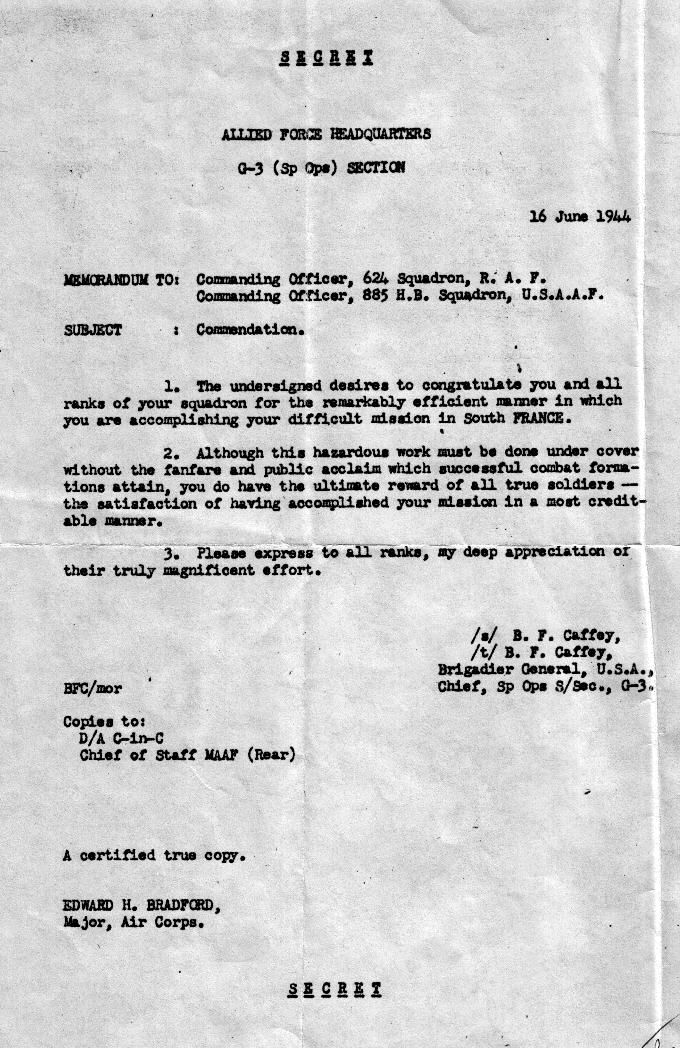
On 16th June 1944 along with 885 H.B. U.S.A.A.F. a commendation was sent to the Squadron This at present is the only documentation available to show what recognition these men deserve.
But something for them all to be proud of.
BACK
İRM1999RM |
|