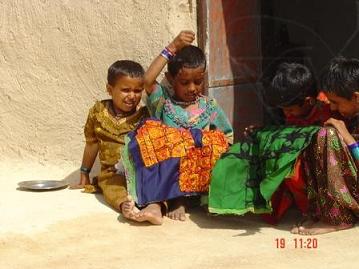
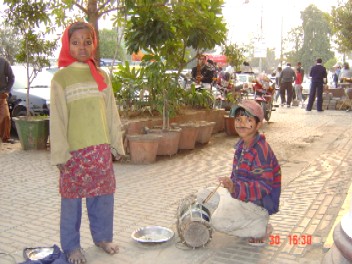
We have to be practical as education alone cannot solve child labour crisis.
Child labor is as a result of low or no family income. Generation of employment to rural women
and men Would rather help reducing this crisis. 'Child labour' children consider themselves as financial contributors to protect
parents & family. This site seeks to move beyond just saying child labor is wrong, to understand the social conditions
that lead to children being forced to work.
.
Here is my home page:
CHILD LABOUR and societyis website for solution to the child labor crisis.This site seeks to move beyond just saying child labor is wrong, to understand the social conditions
that lead to children being forced to work. #childlabourandsociety is an issue each one of us should focus.
.
A concern of child labour exists from poverty. We have to
understand as why children go to work. If parents don't send their children to work I am sure
factories will not be able to consume them. Why poor parents feel children as
their assets who will earn money for their home?
Are they forced
by their parents to go to work? If yes why?
An
appeal to International society
International socieities and organisation need to understand real porblems behind child labour
and come forward to solutions !!!!!!!!!!!!!!
Click Picture to view more photos on child labour
children stictching garment by hand in small factory
Nearly 90% (in my view) of child labourers
are rural children. Who
migrate to cities and end up begging, prostitution, domestic helpers, or other
odd jobs. Child labour issue cannot be dealt until and unless
concerned organizations influence appropriate Governments to revaluate the
economic policies and rural economic growth. Till now rural economy is only
known as agricultural economy and never emphasized on add-on value
products. Governments have to consider growing and generating rural
employment. Target set for 2015 to eradicate poverty may not be achieved until
we understand roots and real causes of poverty. Why child goes to work? This
situation is most urgent to be taken care!!! Child goes to work only when
parents allow. And why parents seek own child's support to sustain home
economy? This is what in my opinion Governments need to understand and bring
policies in accordance.
Need attention to identify areas for job creation
in rural villages. Many areas in agriculture and cottage industries yet
to be identified which can generate employment. For rural illiterate and
semiliterate population the job creation should be linked to their skills like handloom and handicraft sectors,
packing and processing agricultural products, hand tools and related, tourism,
aurvedic medicines, like such there are many resources can promote employment
resources. Agricultural and forest add on value products are most
neglected and research on this subject is least in most countries. Please
check the facts and figures on poverty among rural population and their
children:- Habitat for Humanity International --- Rural poverty and
housing The facts:- 75% of the world's poor, live in rural areas. Low-income
families often lack access to education, health care and decent, affordable
housing. For many it is a long walk from their home to school, to collect water
or to go to a health centre. Poverty in Africa is predominantly rural. 70% of
rural populations in West and Central Africa are poor. In South and East
Africa, 145 million people live in poverty – roughly 75% of the rural
population. In South Asia, 31% of the population live on US $1 per day, down
from 41 percent in 1990. In East Asia and the Pacific, 16 percent live on US $1
per day, down from 30 percent in 1990. A study of rural and urban poverty in
Europe found that while the urban poor were twice as numerous as the rural
poor, the level of poverty was worse in rural areas. In the Latin America and
the Caribbean area, income distribution is the most unequal in the world. The
richest 10% of the population earn 48% of the income, while the poorest 10%
earn less than 2% of income.
True story narrated by rag picker children. My Child labor Videos on youtube
Some percentage
of child labour comes from brutality/ harassments by parents or stepparents.
They are mainly from urban areas of poors. This percentage is too less
and easily controllable by penalties to such parents and children rights. But rural poverty and lack
of employment or partial employment and illiteracy has given birth to majority of child labour
problem.
Nearly 30% of population in poor countries
are poorest of poor who are not even able to earn enough for one day food with
big family have to largely depend on children to earn and feed. Parents of these children are mainly illiterate
or semi literate are unable to find jobs, which can provide enough salary.
Dream of education to children is impossible unless suitable employment
opportunities made available to at least one person in the family. Simply by opening schools and providing books are not
sufficient measures. We need to understand the reason behind child labour
that is poverty and unemployment. Minimizing poverty and creation of
more and more suitable jobs to parents are the only solution of eradication of majority of child labour problem.
Child issues and labour
articles & latest news World Report on Child Labour 2012 (Book). Global Report under the Follow-up to the ILO
Declaration on Fundamental Principles and Rights at Work 2006. Proceedings of the Fourth Annual Meeting of the National Child
Labor Committee. Child Labour Global Conference. News about
child labor, including commentary and archival articles published in The New York Times. Photo Essays from UNICEF
:HELP LINE FOR CHILD TRAFFICKING
AND ABUSE:
Domestic labour - GLOBAL FACTS AND FIGURES
IN BRIEF(ILO) :-
According to recent reports, for example, some 175,000 children under 18 are employed in domestic
service in Central America, more than 688,000 in Indonesia alone, 53,942 under-15 in South Africa and 38,000 children between
5 and 7 in Guatemala.
- The National Human Trafficking Resource Center (Human
Traffic Search) - 24 Hour National Hotline: 888-373-7888 Email: nhtrc@polarisproject.org If you are a victim
of human trafficking and need immediate help or if you suspect a potential trafficking situation, call the National Human
Trafficking Resource Center Hotline now
Free Europe-wide number for child helplines - The number 116 111 for child helplines is addressed directly to children
who seek someone to talk to and provide assistance. The service helps children in need of care and protection and links them
to services and resources; it provides children with an opportunity to express their concerns, talk about issues directly
affecting them or contact someone in distress.
Office To Monitor and Combat Trafficking in Persons (Global
Hotlines List)- The hotline numbers listed, which include hotlines operated by foreign governments and nongovernmental
organizations, have not been officially vetted or assessed, and their listing should not be construed as United States Government
support or approval. The number is typically listed for calling within a country’s border.
24x7 helpline for human trafficking
victims Bihar state - The unit has a 24x7 helpline number - 9470001390. This new unit is expected to solve the human trafficking-related
cases in the distrits-initiativet, including the rehabilitation of victims. National Legal Research Desk - SHAKTI VAHINI H-11, 2nd Floor Hudson Lines , Kingsway Camp ,
New Delhi 110009. shaktivahini@gmail.com - Phone & Fax : 011-42870188
What is child labour- Any child under the
age specified by law worldwide works full time, mentally or physically to earn for
own survival or adding to family income, that interrupts child’s social development and education is called “child
labour”. Any child under the age of 15 engaged in activity to feed family or self is “child labour”. ILO
Convention 138 (C. 138) obligates countries to fix a minimum age for employment that should not be less than the age for
completing compulsory schooling and, in any event, should not be less than 15 years. Developing countries may set the minimum
age at 14. C-138 provides flexibility for countries to establish a younger minimum age of 12 or 13 for children to partake
in “light work.” Children’s
participation in economic activity- that does not negatively affect their health and development or interfere
with education, can be positive. Work that does not interfere with education (light work) is permitted from
the age of 12 years under the International Labour Organization (ILO) Convention 138. So child engaged in part time work
to learn practical skill linked to social or inherited custom or crafts is not child labor. It becomes “child labour”
only when child weaves carpet or works in a factory or fully involved in employment; earns money for own survival or
to support family without schooling, social development. On the other hand if child works for 3-4 hours to learn or earn
for self or parents after schooling, would not be known as child labour as is additional education and practical skill
that a child learns. Definition
of elements of worst forms of child labour- all types of slavery, forceful hiring of children, commercial and sexual
exploitation of children, hard working condition. With the change of world order future education system would be more practical
than present system of theory from books and notebooks. Each child would be encouraged to involve in practical education
that gives skill to survive in competitive world. So, defining “education” becomes important to define “child
labour”. Thus any child works for pleasure, leisure, pocket money, helping parents, hobby, aspiration, non hazardous
part time work is not “child labour”. “Child labour” accounts when child is forced to work under
slavery, poverty, parentless or social or parent’s boycott.
Types of child labour- Self employed and employed
with others are two categories of child labour:
·Self employed- street sellers, rag or scrap pickers, street entertainers, child prostitution or pornography (but
mostly they are hired by notorious gangs), begging, and other odd jobs. These types of children are mainly street children
and rural migrants. Most these children are parentless, abandoned by parents, riot or war misery. The situation changes;
in poor countries they are helping hand to the parents.
·Employed with others- factory or mine workers, domestic servants,
child prostitution or pornography. Conducting work in other’s premises or in other’s custody. Such children work
with parents consent or are parentless. Some are sold or some work to help parents to meet livelihood. (some explained are my opinion may not be accurate) click
the link facts and figures
Inspired gifts from UNICEF. Help a child in Africa. Give an inspirational gift. UNICEF works with children in
over 150 countries around the world. UNICEF report card on education warns millions of children left behind in CEE/CIS
Millions in Central and Eastern Europe and the Commonwealth of Independent States enter the workforce each year without any
formal education give a gift that makes a difference. Buy an inspirational gift from UNICEF Below are basic facts and statistics for each UNICEF priority
area. Facts on Children: by (UNICEF):-
Child Labor Laws (the free dictionary.com) - The specific purpose of child labor laws is to safeguard children
against harm generally associated with child labor, such as exposure to hazardous, unsanitary, or immoral conditions, and
overwork. Child labor legislation primarily applies to business enterprises, but in some states nonprofit activities are within
the purview of the law.
Child Labor - Agriculture (Human Rights Watch) - Of nearly
218 million children engaged in child labor around the world, the vast majority—69 percent, or some 150 million—are
working in agriculture. Child agricultural workers frequently work for long hours in scorching heat, haul heavy loads of produce,
are exposed to toxic pesticides, and suffer high rates of injury from sharp knives and other dangerous tools. Their work
is grueling and harsh, violating their rights to health, education, and protection from work that is hazardous or exploitative.
... Facts About Child Soldiers (Human rights watch):- Today, as many as 300,000 children under the age of 18 serve in government forces or armed rebel groups.
Some are as young as eight years old. Both girls and boys are used as child soldiers. In case studies in El Salvador, Ethiopia,
and Uganda, almost a third of the child soldiers were reported to be girls. Girls may be raped, or in some cases, given to
military commanders as "wives."
There are an estimated 200-300
million child workers globally !!!
One in ten children in the developing world die before their fifth birthday. The diseases they suffer
from differ. But the cause is almost always the same. Poverty. ActionAid is working in some of the poorest areas of the world
to end this cycle of despair. Child sponsorship helps local communities access safe, clean water, education, healthcare, nutrition,
food and a means to generate their own income.Become a sponsor now and you’ll be helping a child. With just 50p
a day, we can help poor families grow more food. With tools, seeds and livestock, they can put a life of hunger behind them.
Help change a life for the price of a chocolate bar. has been rated "Top 5
Chocolate Gifts" by the Food Network and "Best Lesser Known Gift Site on the Net" by the Wall Street Journal.
Child labour is a prevalent problem in the coffee industry (library.thinkquest.org) - In Kenya's central province, 60% of the workforce on coffee plantations are children. (Global March).
Often, they are the children of migrant workers. They may start working when they are tall enough to reach the lower branches
and old enough to identify which berries to pick. Children are involved in all aspects of coffee farming and manual processing
activities: picking, sorting, pruning, weeding, spraying, fertilizing and transporting. During the planting season and harvesting
season in Honduras, children make up 20% and 40% of the labour force respectively (International Labour Organization - ILO).
Child labour in the coffee sector in Tanzania is reported as one of the Worst Forms of Child Labour by ILO. It should be noted
that child labour doesn't necessarily harm the child. As long as the work does not interfere with the child's education, health
and welfare, then the positive aspects of child labour should be recognized: "children learn as they work, participate in
family activities, learn to be productive members of society, and help their families be more viable". (Tea & Coffee article)
Drink Coffee. Help Villages. Born to change the world. Drink Pangeo Coffee and join in.
(World vision UK) The shocking
reality is that: An estimated two million children are
enslaved in the global sex trade. About 300,000 children in the world are actively involved in armed conflict.
Only 2% of disabled children in developing countries receive and education. In sub-Saharan Africa alone,
12.3 million children have been orphaned as a result of AIDS. World Vision believes that all children have
rights, regardless of their age, gender, race, ethnicity or ability. These rights are clearly set out in the United Nations Convention on the Rights of the Child (UNCRC), which was agreed in 1989. World Vision works to make a serious and sustainable
impact on poverty and its causes, especially as they affect children. We are committed to long-term change, which
means connecting people.
child labor - child labor use of the young as workers in factories, farms, and
mines. Child labor was first recognized as a social problem with the introduction of the factory system in late 18th-century
Great Britain. Children had formerly been apprenticed (see apprenticeship ) or had worked in the family, but in the factory
their employment soon constituted virtual slavery, especially among British orphans. This was mitigated by acts of Parliament
in 1802 and later.
Global March on UN Millenium Goals - The focus of attention
is to actively integrate all ‘out of school’ children into formal education systems. Children have the right to
education at least until the age they are allowed to work (which is 15, while developing countries can choose 14). In addition,
all barriers (for example: financial barriers) to local schools should be removed, by providing financial and infrastructural
support About Child Labour / Facts & Figures (stopchildlabour.eu).
Hunger Facts: International(bread.org) :- Every
day, almost 16,000 children die from hunger-related causes--one child every five seconds. Every year, more than 20 million
low-birth weight babies are born in developing countries. These babies risk dying in infancy, while those who survive often
suffer lifelong physical and cognitive disabilities. The world hunger problem: Facts, figures and statistics library.thinkquest.org :- Every year 15 million children die of hunger. One out of every eight children under the age of twelve
in the U.S. goes to bed hungry every night. Half of all children under five years of age in South Asia and one third of those
in sub-Saharan Africa are malnourished. About 183 million children weigh less than they should for their age. CHILD HUNGER facts and figures (WFP):- Every five seconds a child dies because she or he is hungry. Undernutrition in children under the
age 18 affects an estimated 350 to 400 million children. For 21 dollars you can feed a hungry child in school for a year.
More than 70 percent of the world’s 146 million underweight children under age five years live in just 10 countries,
with more than 50 per cent located in South Asia alone. 10.9 million children under five die in developing countries each
year. Malnutrition and hunger-related diseases cause 60 percent of the deaths. One out of four children - roughly 146 million
- in developing countries are underweight. WFP provided school meals and/or take home rations to 20.2 million children in
71 countries in 2006. It is estimated that 684,000 lives child deaths worldwide could be prevented by increasing access to
vitamin A and zinc. Iron deficiency is the most common form of malnutrition, affecting 180 million children aged under
four. Iodine deficiency is the main cause of brain damage in the early years of a child's life. The Reality of Hunger(feedingchildrenbetter.org):- 40% of all emergency shelter food recipients are children, although they represent only 25% of the U.S.
population. 13 million kids live in households that do not have an adequate supply of food. A child who is unequipped to
learn because of hunger and poverty is more likely to be poor as an adult. Children who are hungry are less likely to become
productive citizens. Center on Hunger and Poverty. Hungry children have a harder time learning in school, shorter attention
spans, and suffer more absences due to illness.
Child labour
facts and figures:- CHILD LABOUR TODAY (corrystuart.com) Although the internationally recommended minimum age for work is 15
years (ILO Convention No. 138) and the number of child workers under the
age of 10 is far from negligible, almost all the data available on child labour concerns the 10-to-14 age group. Combining
various official sources, the ILO estimates that more than 73 million children in that age group alone were economically
active in 1995, representing 13.2 per cent of all 10-to-14 year olds around the world. The World Day Against Child Labour 2007 (scout.org) The International Labour Organization (ILO) estimates that 70% of child labour is found in this sector and
the most recent Global Monitoring Report on Education For All indicated that more than 80% of out-of-school children are in
rural areas. Child Labour Facts and Figures(wfsnews.org): agriculture is one of the three most perilous work sectors. Yet, the world over, more than 132 million
girls and boys aged between 5 to 14 years are employed in crop and livestock production Sex Trafficking: Facts & Figures(globalissues.net) The United Nations estimates that 700,000 to 4 million women and children are trafficked around the world
for purposes of forced prostitution, labor and other forms of exploitation every year. Child Rights Information Network (CRIN) Recent figures from the International Labour Organisation (ILO) show that:Globally, 1 in 6 children
work 218 million children aged 5 - 17 are involved in child labour world wide. 126 million children work in hazardous conditions.
The highest numbers of child labourers are in the Asia/Pacific region, where there are 122 million working children.
The highest proportion of child labourers is in Sub Saharan Africa, where 26% of children (49 million) are
involved in work. Child labour online (Encyclopædia Britannica, Inc.)
Child Labor in the Cocoa Industry(laborrights.org) :- The
U.S. Department of State estimates that more than 109,000 children in Cote d’Ivoire’s cocoa industry work under
“the worst forms of child labor,” and that some 10,000 are victims of human trafficking or enslavement. These
child workers labor for long, punishing hours, using dangerous tools and facing frequent exposure to dangerous pesticides
as they travel great distances in the grueling heat. Check video - VIDEO Chocolate and Child Labor PSA (laborrights.org)
Nearly
40 - 50% children among working-children are street children. These children survive by begging, stealing, shoe polish, street
performance, collecting scraps, street selling and other. Some, particularly girls, get involved into the flesh trade. The
majority of children on the streets in developing countries are rural migrants. Children migrate with their parents
and as a result of worst economical condition of parents, get involved into odd jobs. Some percentage comes alone to urban
cities due to bad environment in their own home such percentage is less. Major percentages of such children get addicted
to use of drugs and their main work is scrap collection or stealing. With girls it is serious issue as rural poor illiterate
parents abandon girl child to end up life in brothel or street prostitution and of them some escape to streets begging,
scrap collection and finally end up as prostitutes. In developing countries; girl child is considered as disgrace in poor
illiterate orthodox uncivilized families. Nearly half of street beggars and garbage collectors are girl children. Most such
girls are neglected by parents as are considered burden on them.
Urban children who turn as street children are 10% to 20%
of street children. Family economical condition or unpleasant abusive environment or abandoned by parents or mental disorder
are the major reason for them to leave home. Number of street Children on account of unpleasant abusive parents in
Brazil, U.K, U.S.A, and Mexico are extremely high.
Aggressive Movies and TV channel environment too has contributed spoiling
children to source money through ugly street jobs for drug addiction; become street children. Also friend circle or
family alcoholic habit stimulates children to taste such life
(Above information is only my views observing and contacting urban and rural street children,
may not be accurate).
Click below link for detailed facts and figures from various websites and sources for child prostitution - trafficking,
and street children; clearly indicate that number of child prostitution and street children are increasing each day, each
month and each year. Arresting child labor in factories in several countries have opened numerous fields for young
children to opt alternate ways of sourcing money. New fields like pornography, sex tourism, plastic items, plastic bags and garbage
collection, begging in streets, pick pocketing. Involvement of young children in these areas is much-much more than what
figures show. Collection of facts and figures is tough job and may not achieve accuracy as such activities are hidden
and illegal and fear of getting caught by authorities does not help revealing correct numbers. They can
be seen in railway stations, national bus stops, retail markets, main road sides, city garbage dumping places, over and under
bridges, unauthorized settlement areas, and in brothel areas. http://www.sadashivan.com/links/
U.S. Congress Cites Growing World Problem of "Street Children" :- More than 100 million children worldwide are living hand-to-mouth,
bereft of family and homes, and are "particularly vulnerable to abuse" in countries as wide-ranging as Uganda, Zimbabwe, Brazil
and the Philippines, Representative Christopher Smith, chairman of the U.S. House of Representatives Africa Subcommittee said
September 13. between 32,000 and 52,000 children known as "night commuters" travel from war-torn areas of Uganda "each night
to urban centers to avoid abduction by the Lord's Resistance Army," a rebel movement that has battled the central government
for more than 10 years. Democratic Republic of Congo, Denehy said, "between 25,000 and 50,000 child refugees, war orphans
and other children, widely perceived to be street thugs, are accused of witchcraft or sorcery. They live on the streets throughout
the country, and engage in petty crime, begging and/or prostitution." For Africa, Alton gave the following figures for street
children: Kenya, 250,000; Ethiopia, 150,000; Zimbabwe, 12,000. And he said that many street children have been forced to serve
as child soldiers, suffering death or terrible wounds. In the Democratic Republic of Congo (DRC), he said, the United Nations
estimates that 30,000 children under the age of 12 are under arms, making up 10 percent of the armed groups in the region.
At the same time, Alton said, "20,000 children are believed to live on the streets in the DRC capital, Kinshasa."
United Nations Environment Programme(unep.org):- What is the deforestation rate on Earth? - Worldwide,
deforestation continues at an alarming rate, about 13 million hectares per year, an area the size of Greece or Nicaragua.
Africa and South America have the largest net loss of forests. In Africa it is estimated that nearly half the forest loss
was due to removal of wood fuel. Forests in Europe are expanding. Asia, which had a net loss in the 1990s, reported a net
gain of forests in the past five years, primarily due to large-scale forestation in China What are the links between forests
and climate change? - Trees absorb carbon dioxide and are vital carbon sinks. It is estimated that the world’s forests
store 283 Gigatonnes of carbon in their biomass alone, and that carbon stored in forest biomass, deadwood, litter and soil
together is roughly 50 per cent more than the carbon in the atmosphere. Forests cover 30 per cent of the planet’s total
land area. The total forested area in 2005 was just under 4 billion hectares, at least one third less than before the dawn
of agriculture, some 10,000 years ago. (1 hectare is equal to 10,000 square metres)